In short
The traditional orthotics workflow often relies on manual methods (tape measure, molding, data entry) that slow down measurement and create discrepancies. MyFit Solutions’ mobile 3D scanning captures a body area from a smartphone and generates a usable 3D model, directly integrable into business tools (CAD, internal platforms, API/Webhook connectors). This approach makes measurement more reliable and streamlines the whole workflow, from capture to design.
Today, orthotics professionals can integrate mobile 3D scanning into their orthotics workflow. From a smartphone, they can capture a hand, a foot, a torso or a limb, then obtain a usable 3D model.
This approach helps replace certain manual steps with more precise and repeatable digital measurement. The morphological data obtained can then be used to design a custom orthosis or a custom orthotic device.
In this article, discover how MyFit Solutions helps professionals digitalize their orthotics workflow, from 3D capture to data integration into their existing tools.
Digitalizing the orthotics workflow with mobile 3D scanning
Why rethink measurement in orthotics?
In orthotics, measurement is a key step. It directly affects the quality of the device, its fit and the patient’s comfort.
However, traditional methods can still be restrictive. Tape measurement, molding, travel or manual data entry can create measurement discrepancies and slow down the orthotics workflow.
Mobile 3D scanning offers a simpler approach. From a smartphone, the professional can capture a body area and obtain reliable morphological data, without specialized hardware.
This approach saves time, reduces human error and improves continuity between measurement, design and patient follow-up.
From morphological capture to a usable 3D model
With MyFit Solutions, mobile 3D scanning does more than produce an image. It generates a usable 3D model from a guided capture performed with a smartphone.
This model can be used to extract measurements, visualize morphology or prepare the design of an orthopedic device. The data obtained becomes easier to share, store and integrate.
For professionals, the value is concrete. Mobile 3D scanning connects field capture to workflow tools, such as CAD software, internal platforms or partner workflows.
The orthotics workflow becomes smoother. Data flows more easily, manual steps are reduced and teams can work from a more reliable digital base.
How to perform a 3D scan with a phone
3D capture from a smartphone, with no specialized hardware
With MyFit Solutions, 3D scanning is performed directly from a smartphone. The professional can scan a body area themselves, or guide the patient through the capture process.
The experience is designed to be simple. The scan is guided step by step to obtain a usable capture, with no specialized hardware, no dedicated 3D scanner and no computer connection.
Once the scan is complete, the data is sent to a secure platform. It can then be processed, analyzed and transformed into a morphological 3D model.
This model can be downloaded or integrated into existing digital processes through standard connectors, such as APIs and Webhooks.
For orthotics professionals, the value is clear: they obtain a reliable digital base to measure, design or adapt an orthopedic device, directly within their business workflow.
A guided scan designed for field use
MyFit Solutions develops mobile 3D scanning technology designed for field use. The capture is performed from a smartphone, with a guided process that supports the user at every step.
The professional does not need bulky or expensive equipment. A smartphone is enough to capture a body area, then access the 3D model from the MyFit Solutions web platform.
This approach simplifies digital measurement, whether in clinic, in the field or remotely. It reduces reliance on manual methods, such as tape measurement, which can vary from one operator to another.
For orthotics professionals, the benefit is concrete: more reliable and repeatable morphological data, directly usable in their orthotics workflow.
Mobile 3D scanning can therefore help improve device fit, reduce measurement errors and limit back-and-forth exchanges linked to poorly adapted products.
Data that can be integrated into operational workflows
Once the scan is complete, the data does not remain isolated. It can be integrated into the tools professionals already use: CAD software, internal platforms, business interfaces or partner workflows.
MyFit Solutions supports this continuity through standard connectors, such as APIs and Webhooks. 3D data can therefore move more easily between capture, analysis and design steps.
This integration limits manual data entry and reduces scattered email exchanges. Professionals work from centralized, reliable and usable data.
For teams, the orthotics workflow becomes more fluid. Information is better structured, easier to share and easier to use in a custom design process.
Which body parts can be scanned in orthotics?
Mobile 3D scanning can adapt to several body areas. This is one of its main advantages for orthotics professionals: the same technology can support different use cases.
Depending on the device to be designed or adjusted, the professional can capture a hand, a wrist, a foot, a leg, a torso or the back. Each scan provides usable morphological data that can be integrated into an orthotics workflow.
Hand, wrist and upper limb
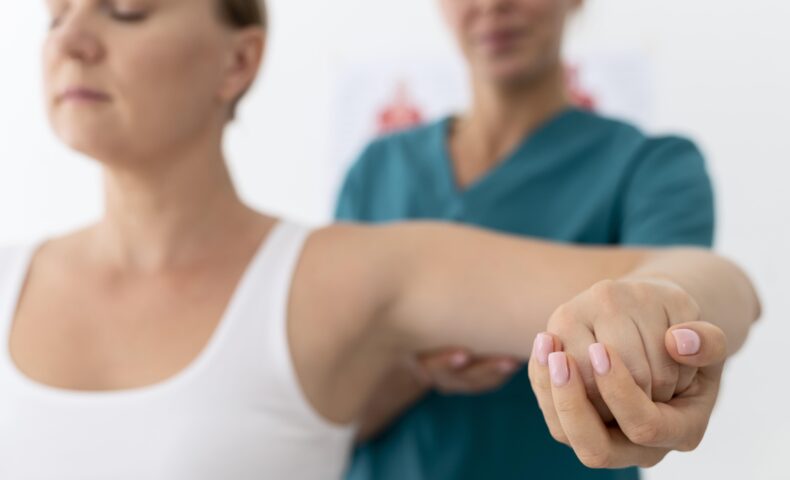
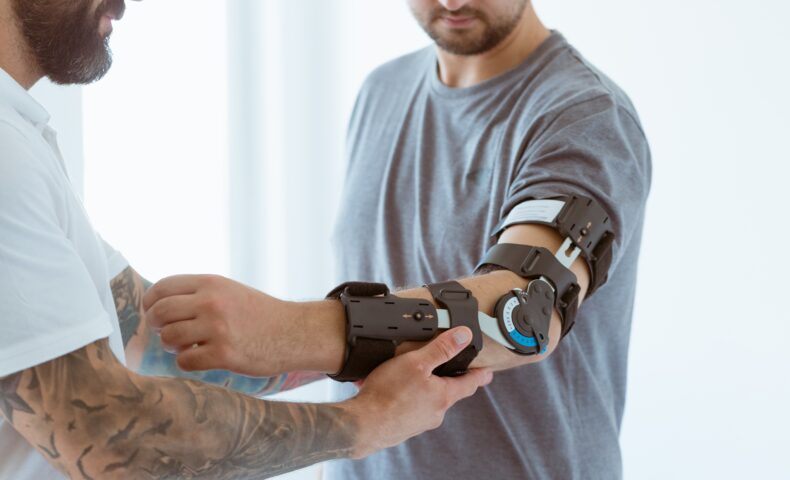
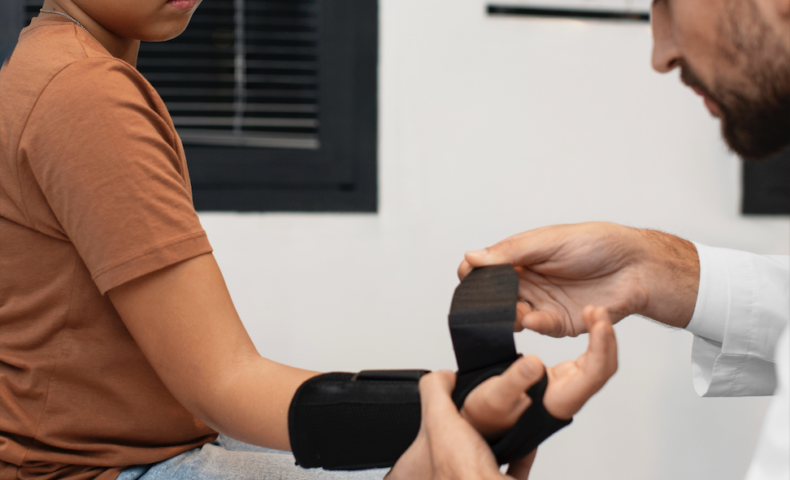
Mobile 3D scanning can be used to capture the hand, wrist, forearm or arm. This data can then be used to visualize the patient’s morphology, extract measurements or prepare the design of an adapted device.
For professionals, this approach helps reduce manual measurement and provides a more reliable digital base. It is especially useful when device fitting depends on precise anatomical shapes.
Foot, leg and lower limb
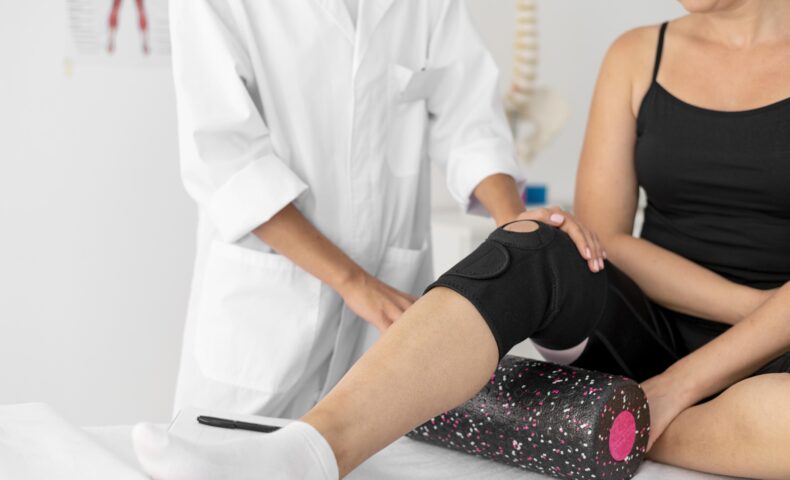
Mobile 3D scanning can also be used to capture the foot, ankle, leg or knee. It can support different use cases in orthotics, podiatry or custom medical device design.
The 3D data obtained helps professionals better understand lower-limb morphology. It can then be integrated into a design workflow, size recommendation process or product adaptation workflow.
Torso, back and trunk devices
For trunk devices, mobile 3D scanning can capture the morphology of the torso or back. This approach can help create a digital representation of the patient, with no molding and no heavy equipment.
The data obtained can support the design or adjustment of corsets, spinal braces or other orthotic devices. It gives professionals a structured working base that is easier to store, compare and share.
Why choose mobile 3D scanning?
Mobile 3D scanning addresses a simple challenge: obtaining reliable morphological data without making the orthotics workflow heavier. It helps professionals move from manual measurement to a more digital, more fluid and easier-to-deploy process.
More reliable digital measurement
In orthotics, a few millimeters can make a real difference. A poorly fitted device can lead to discomfort, product returns or additional correction steps.
Mobile 3D scanning captures the patient’s morphology with greater precision and repeatability. The data obtained no longer depends only on a manual measurement or manual data entry.
This approach helps professionals work from a more reliable digital base. It also makes data easier to store and reuse over time.
A simpler workflow for professionals
With a smartphone, 3D capture becomes more accessible. Professionals can perform a scan in clinic, in the field or remotely, with no specialized hardware.
The data can then be used in business tools: internal platforms, CAD software, standard connectors or partner workflows. The process becomes more direct and easier to follow.
As a result, teams can reduce manual steps, scattered exchanges and improve continuity between measurement, design and patient follow-up.
A more scalable solution for manufacturers and practitioner networks
For medical device manufacturers and practitioner networks, mobile 3D scanning offers a major advantage: it can be deployed at scale without requiring heavy equipment.
Each professional can use a smartphone to capture the required data, while following a guided and standardized experience. This helps harmonize practices across several sites, clinics or patient touchpoints.
This logic supports a more scalable orthotics workflow. Data is better structured, processes are more consistent and teams can gain efficiency without making their organization more complex.
La Semelle Française x MyFit Solutions: orthotic insoles via 3D scanning
A concrete use case for a digitized orthotics workflow
La Semelle Française integrated MyFit Solutions technology to simplify its orthotics workflow. Thanks to mobile 3D scanning, the company can replace impression boxes with a faster, simpler and more usable digital measurement process.
From a smartphone, the patient can perform a foot scan. The data obtained can then be used to design custom orthopedic insoles adapted to their morphology.
This digital step brings several concrete benefits:
- time savings: the 3D scan is fast and the data is immediately usable;
- ease of use: the experience is more accessible for both patients and teams;
- less back-and-forth: the scan limits repeated exchanges of impression boxes;
- less single-use material: digital measurement reduces the need for disposable physical supports;
- better data continuity: morphological information can be integrated into the business workflow.
This use case shows how mobile 3D scanning can turn an often restrictive step into a more fluid and scalable process.
Beyond orthopedic insoles, MyFit Solutions technology can adapt to other medical applications: orthotic devices, morphological monitoring, scoliosis or eligibility assessment for certain care pathways.
Less back-and-forth, more usable data
MyFit Solutions designed its solution to meet the constraints of orthotics professionals. The goal is to simplify morphological capture, make data more reliable and streamline each step of the workflow.
Thanks to mobile 3D scanning, professionals can obtain more usable measurements and 3D models. Data is no longer scattered across different tools or manual exchanges: it becomes centralized, structured and reusable.
The solution brings several concrete benefits:
- precision: 3D scanning captures the patient’s morphology at scale, with a high level of detail;
- simplicity: the scan experience is guided, intuitive and adapted to use in clinic, in the field or remotely;
- efficiency: data is quickly available and can be integrated into professional tools;
- less back-and-forth: professionals can limit exchanges linked to physical impressions, incomplete measurements or poorly fitted products;
- better continuity: teams work from a reliable digital base that is easier to share and store.
For manufacturers, practitioner networks and healthcare professionals, mobile 3D scanning helps make the orthotics workflow more fluid, more reliable and more scalable.
The benefits of mobile 3D scanning for orthotics workflows
Mobile 3D scanning provides a concrete answer to the challenges faced by orthotics professionals. It helps make measurement more reliable, simplifies data exchange and better connects each step of the workflow.
Precision, repeatability and time savings
Data precision is essential to design or adapt an orthopedic device. With mobile 3D scanning, professionals can obtain a scaled morphological capture directly from a smartphone.
This approach improves measurement repeatability. It reduces discrepancies linked to manual methods and enables teams to work from a more reliable digital base.
Time savings are also significant. The scan is fast, data becomes available more quickly and teams can reduce time-consuming steps in the process.
Deployment in the field, in clinic or remotely
Mobile 3D scanning can be used in different contexts: in clinic, in a healthcare facility, in the field or remotely. This flexibility makes adoption easier for professionals and practitioner networks.
There is no need to invest in a dedicated 3D scanner or heavy equipment. A smartphone is enough to perform the capture, with a guided experience designed for professional use.
This ease of deployment makes it easier to extend 3D scanning across several sites, teams or patient pathways.
Data integration into business workflows
Data from the 3D scan can be integrated into the tools professionals already use: CAD software, internal platforms, APIs, Webhooks or partner workflows.
This integration helps reduce manual data entry, scattered exchanges and information loss. Teams work with centralized and usable data, from capture to design.
The orthotics workflow therefore becomes more fluid, more structured and easier to scale.
Traditional methods or mobile 3D scanning: what’s the impact on the orthotics workflow?
| Criteria | Traditional methods | MyFit mobile 3D scanning |
| Required equipment | Tape measure, molding, impression box | None, just the smartphone camera |
| Measurement reliability | Depends on the operator | Guided by the app, reproducible |
| Remote capability | No | Possible |
| Integration with business tools | Manual, re-entry required | Direct, via CAD/API/Webhooks |
| Data continuity | Scattered across tools | Centralized on a single platform |
Want to digitalize your orthotics workflow?
Do you want to integrate mobile 3D scanning into your measurement, design or patient follow-up processes? MyFit Solutions helps you turn morphological data into usable 3D models, directly from a smartphone.
Our solution adapts to the needs of orthotics professionals, medical device manufacturers and practitioner networks.
FAQ
No, it mainly replaces the measurement step. The resulting data then feeds into the existing design and manufacturing steps.
The hand, wrist, foot, leg, torso, or back, depending on the orthotic device being designed.
Through standard connectors like APIs and Webhooks, which connect the MyFit Solutions platform to the CAD software or internal platforms already in use.
MyFit mobile photogrammetry works with the standard camera on an iOS- or Android-compatible smartphone, with no additional sensor or accessory.