In short
An external breast prosthesis needs to be fitted to the patient’s morphology to be comfortable and discreet day to day. Custom breast prosthesis 3D scanning makes it possible to capture the shape, volume, and symmetry of the chest directly from a smartphone, using MyFit mobile photogrammetry. The resulting data is sent to the manufacturer, who designs the prosthesis or recommends a suitable size. This approach makes remote follow-up easier, as a complement to — not a replacement for — the patient’s medical care.
What is a breast prosthesis?
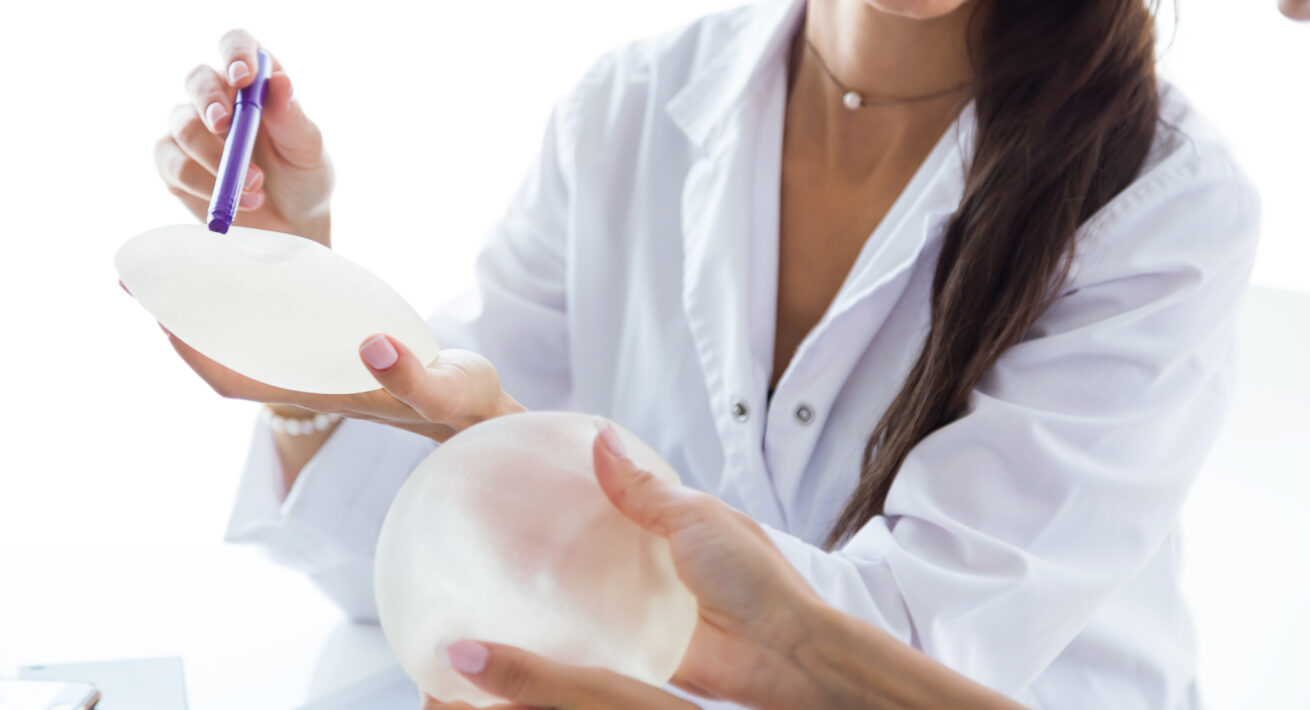
A breast prosthesis is a device used to restore the shape and volume of a breast following surgery, such as a mastectomy, or to address a congenital condition. A distinction is generally made between external breast prostheses, worn inside an adapted garment, and internal implants placed during reconstructive surgery.
When is a breast prosthesis worn?
Breast prostheses are used in several medical contexts, notably:
- following a mastectomy related to breast cancer, including when the patient doesn’t want or isn’t able to pursue reconstructive surgery;
- to address a congenital condition, in cases of asymmetry or absent breast tissue; alongside reconstructive surgery, while the result is still settling.
For more information on breast reconstruction options, the American Cancer Society provides detailed guidance for patients.
Who prescribes a breast prosthesis?
Healthcare professionals such as plastic surgeons, oncologists, or specialized orthotist-prosthetists guide the patient based on her medical needs. They assess the patient’s morphology and expectations before recommending the most suitable type of prosthesis.
How does custom breast prosthesis 3D scanning work?
Designing a well-fitted external breast prosthesis requires precise data on the patient’s morphology: chest shape, volume, and symmetry.
Step 1: 3D chest scanning
The healthcare professional performs the capture using a mobile app, relying on MyFit mobile photogrammetry. This scan captures the patient’s morphological data and makes it possible to reconstruct a faithful 3D model, which serves as the basis for designing the prosthesis.
Step 2: sending the data to the manufacturer
The 3D model and the associated digital measurements are then sent to the medical device company in charge of manufacturing, which can design a custom prosthesis or recommend a standard size suited to the patient’s morphology.
Why use mobile 3D scanning for a custom breast prosthesis?
Digitizing this process via a mobile app offers several benefits for healthcare professionals and patients:
- Simplicity: the scan takes just a few moments, with a guided app and no specialized hardware.
- Reliability: the digital measurements obtained are directly usable for designing the prosthesis.
- Accessibility: a smartphone is all it takes, making measurement possible in different medical settings, and even at the patient’s home.
- Easier follow-up: post-surgical monitoring can be done remotely, with no need for systematic in-person visits, alongside the patient’s regular medical follow-up.
Traditional measurement or custom breast prosthesis 3D scanning: what’s the difference?
| Criteria | Traditional measurement | MyFit mobile 3D scanning |
| Required equipment | Manual measuring tools | None, just the smartphone camera |
| Data obtained | Point measurements | 3D model + digital measurements |
| Remote capability | No | Possible |
| Tracking over time | Repeated appointments | Remote comparison of scans |
| Integration with manufacturing tools | Manual | Direct, via the web platform |
FAQ
A healthcare professional trained to use the mobile app — a surgeon, an orthotist-prosthetist, or another practitioner involved in the patient’s care.
Yes, it can be used to track changes in morphology over time, remotely, alongside the follow-up provided by the medical team.
No. MyFit mobile photogrammetry works with the standard camera on an iOS- or Android-compatible smartphone, with no additional sensor.