In short
A custom soft brace provides targeted support for a joint while maintaining freedom of movement. MyFit mobile 3D scanning captures the target area (wrist, thumb, knee, ankle) directly from a smartphone, using MyFit mobile photogrammetry, to obtain reliable digital measurements and support the design or fitting of the device.
A custom soft brace provides targeted support for a joint. It also maintains a certain freedom of movement.
For professionals, the challenge is clear. They need to offer a device that is comfortable, well-fitted and tailored to each patient.
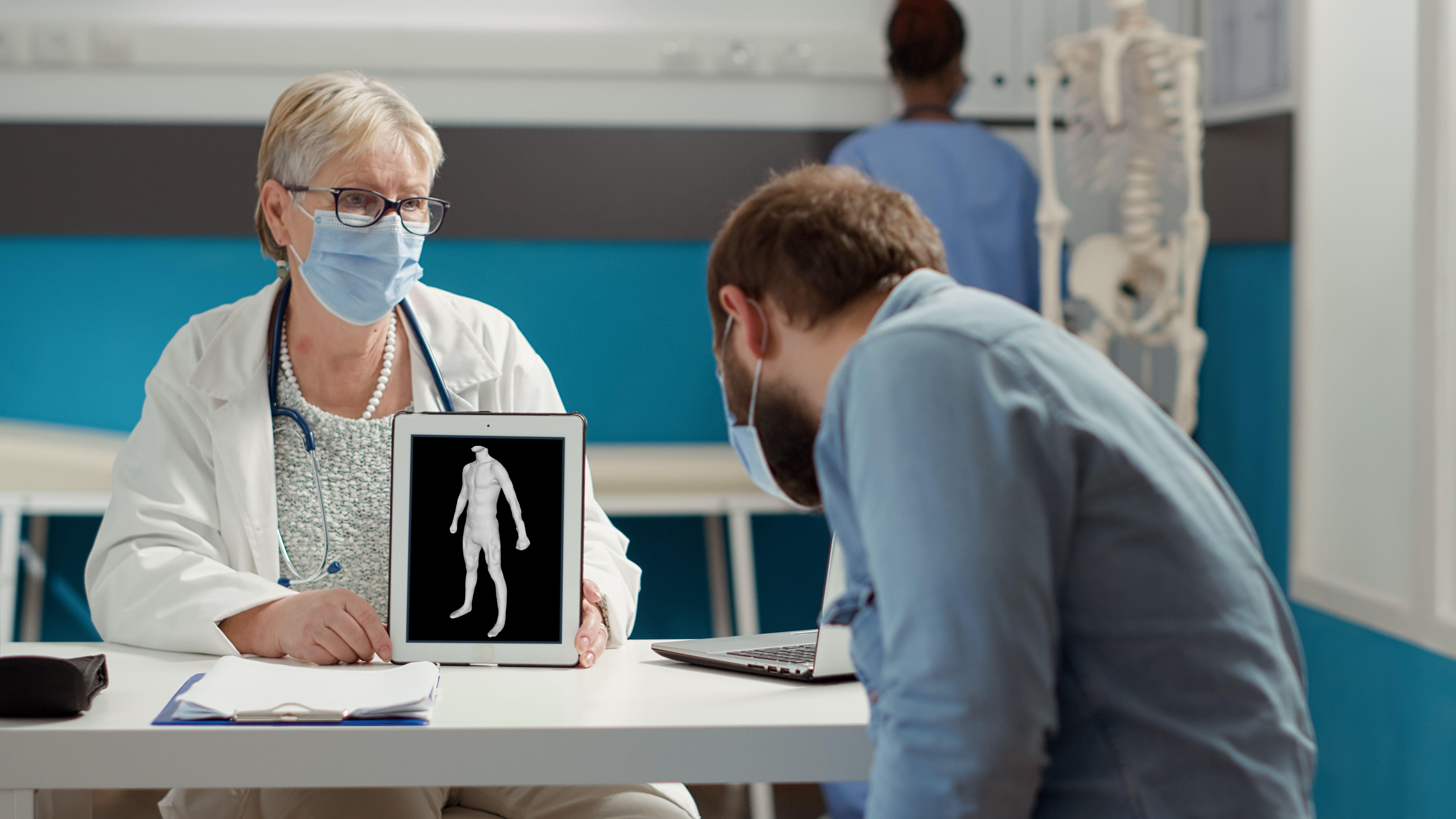
Thanks to mobile 3D scanning, this adaptation becomes easier to deploy. From a smartphone, it is possible to capture a body area and obtain a usable 3D model.
Digital measurements can then help design, adjust or recommend a more suitable soft brace.
In this article, discover how MyFit Solutions helps healthcare professionals, manufacturers and orthotics specialists adapt soft braces using mobile 3D scanning.
What is a custom soft brace?
A flexible support device tailored to the patient
A soft brace is a medical device. It helps support, stabilize or correct a joint, while maintaining a certain level of flexibility.
Unlike a rigid brace, it does not fully immobilize the joint. It allows some movement, while helping reduce pain and improve joint function.
Custom soft braces can be used on several body areas:
- soft wrist brace: for carpal tunnel disorders or mild sprains;
- wrist and thumb soft brace: for conditions affecting both the wrist and thumb;
- soft thumb brace: to support conditions such as rhizarthrosis;
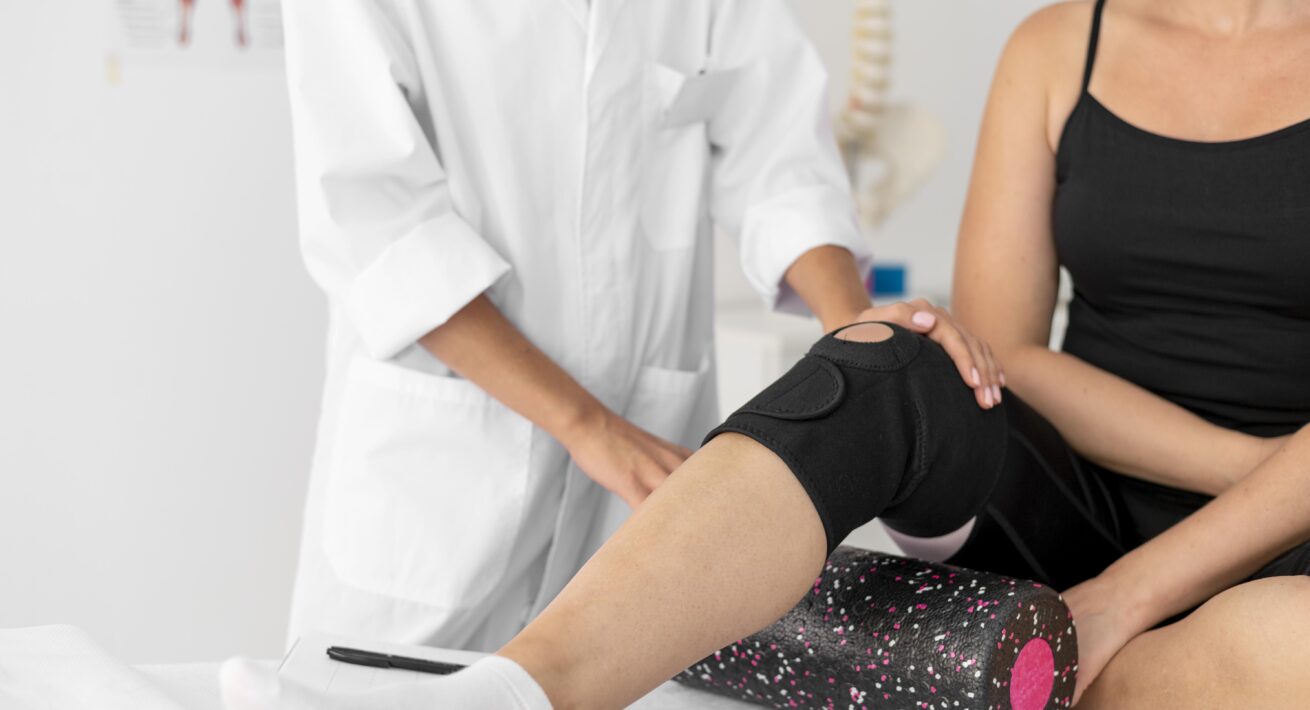
- soft knee brace: to support the joint in cases of osteoarthritis or ligament instability;
- soft ankle brace: to provide support after a sprain or in the case of chronic conditions.
What is the purpose of a brace?
The main role of a brace is to provide support adapted for a joint or weakened area. This support depends on the patient’s needs and the prescribed device.
A brace can help relieve pain. It reduces certain constraints on the affected joint and improves everyday comfort.
It can also stabilize a joint. By limiting excessive movement, it protects the weakened area and reduces the risk of further injury.
In some cases, a brace can also support posture correction. It guides the joint toward a more suitable alignment and can help limit the progression of certain conditions.
Finally, it can support rehabilitation. It accompanies movement while providing targeted support after an injury, surgery or treatment.
What is the difference between a brace and an orthosis?
The terms “brace” and “orthosis” are sometimes used interchangeably. However, they do not always refer to the exact same use.
An orthosis is a medical device designed to support, correct, protect or assist a joint. It can be custom-made or prefabricated. It is often intended for longer-term use.
A brace is generally used in a more temporary way. It is often used after trauma, a sprain, a fracture or surgery.
In both cases, the choice of device depends on the medical need, the level of support required and the patient’s morphology.
How to adapt a custom soft brace to the patient’s morphology
Mobile 3D scanning makes it easier to adapt a custom soft brace to the patient’s morphology. From a smartphone, the professional can capture the target body area and obtain usable digital measurements.
This approach makes it easier to scale custom soft brace workflows. It can be used to recommend a size, adjust an existing device or prepare the design of a custom soft brace.
Step 1: scan the target body area
The process starts with a mobile 3D scan of the area to be fitted. This may be a hand, wrist, wrist-thumb area, leg or another joint.
The capture provides a precise representation of the patient’s morphology. It can replace or complement manual measurement methods, which often vary from one operator to another.
Step 2: obtain a 3D model and digital measurements
Using mobile MyFit mobile photogrammetry, the images captured during the scan are transformed into a 3D model. This model can be combined with digital measurements, depending on the use case.
The professional can then access the 3D model on the MyFit Solutions web platform. The data can be visualized, downloaded or integrated into business tools, such as CAD software.
The models are generated to scale and ready to use. They provide a reliable digital base to design, adjust or recommend a suitable soft brace.
Step 3: adapt the soft brace
The final step is to use the data obtained to adapt the device. The professional can recommend the most suitable standard size or prepare a custom soft brace.
Thanks to mobile 3D scanning, the brace can better match the patient’s morphology. This approach helps improve comfort, support and fit.
To learn more, watch how mobile 3D scanning works in this video:
Manual measurement or mobile 3D scanning: what’s the impact on soft brace fitting?
| Criteria | Manual measurement | MyFit mobile 3D scanning |
| Required equipment | Tape measure | None, just the smartphone camera |
| Measurement reliability | Depends on the operator | Guided by the app, reproducible |
| Remote capability | Unreliable | Possible and reliable |
| Multi-site standardization | Difficult | Made easier |
| Data obtained | Point measurements | 3D model + digital measurements |
Why make soft brace measurement more reliable?
For a soft brace, fit is essential. A device that is too tight can create discomfort. A device that is too loose can lose efficiency and fail to provide the expected support.
Measurement therefore plays a central role. It influences size recommendation, support quality and the patient’s daily experience.
With mobile 3D scanning, professionals can rely on more reliable morphological data. They reduce discrepancies linked to manual measurements and work from a more precise digital base.
This approach is also useful for manufacturers and practitioner networks. It helps standardize measurement, reduce sizing errors and make it easier to deploy a custom soft brace offering.
The benefits of 3D scanning for custom soft braces
MyFit Solutions designed its solution to meet the needs of healthcare professionals, manufacturers and orthotics specialists. The goal is simple: make measurement easier, improve data reliability and help adapt soft braces to each patient.
Precision
Mobile 3D scanning makes it possible to capture a body area with a high level of detail. Professionals obtain precise and usable morphological data.
This precision makes it easier to adapt a custom soft brace. It helps take into account the patient’s anatomy, volumes and specific needs.
Ease of use
The scan is performed from a smartphone, with no dedicated 3D scanner or specialized hardware. The experience is guided, intuitive and designed for professional use.
This simplicity makes it easier to use in clinic, in the field or remotely. It also helps standardize measurement across several sites or teams.
Efficiency
Mobile 3D scanning can be easily integrated into existing workflows. 3D models and digital measurements can help recommend a size, adjust a product or prepare a custom design.
The data can also be integrated into business tools, such as internal platforms or CAD software. Professionals work from a reliable digital base.
Whether for a soft wrist brace, soft knee brace or soft brace for rhizarthrosis (thumb osteoarthritis), mobile 3D scanning makes it easier to adapt the device to the patient’s morphology.
FAQ
A soft brace maintains a certain freedom of movement, while a rigid brace fully immobilizes the joint.
The wrist, thumb, knee, ankle, or any other joint requiring flexible support.
No. MyFit mobile photogrammetry works with the standard camera on an iOS- or Android-compatible smartphone.
No, it makes measurement easier once the brace has been prescribed by a healthcare professional.