In brief
Canadian manufacturer O3D produces custom knee braces for more than 60 clinics. By replacing its dedicated scanners with our smartphone 3D scanning solution, it transformed how it takes measurements and accelerated its growth.
– 40% operational time savings: faster patient assessments and scan data that flows without friction.
– Over 60% business growth: from 90 to 150 braces produced per week.
– $0 hardware investment: no dedicated equipment, a smartphone is all it takes.
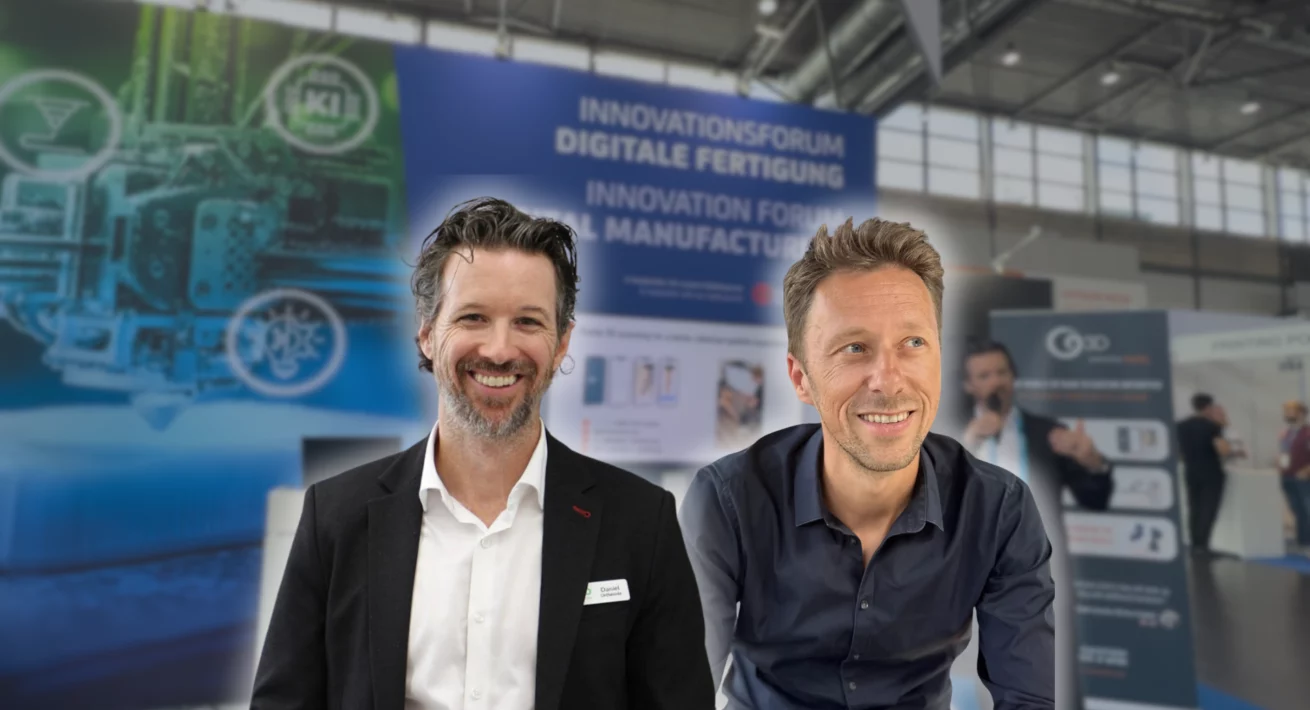
To produce its custom knee braces, Canadian manufacturer O3D replaced its dedicated scanners with our smartphone 3D scanning app. The result: 40% time saved in the clinic and more than 150 braces a week. This is the story shared on stage at the OTWorld Innovation Forum “Digital Manufacturing” in Leipzig in May 2026 by Daniel Larouche, Vice-President of O3D, and Xavier Deshayes, founder and CEO of Myfit Solutions, around our mobile 3D scanning solution.
O3D: ten years of custom knee braces
O3D was founded in 2014 in Montreal by Éric Moreau, on the IT side, and Daniel Larouche, an orthotist for more than 25 years who runs a network of clinics in Quebec. The original goal: bring custom orthotics into the digital era, at a time when measuring and casting were still manual and inconsistent.
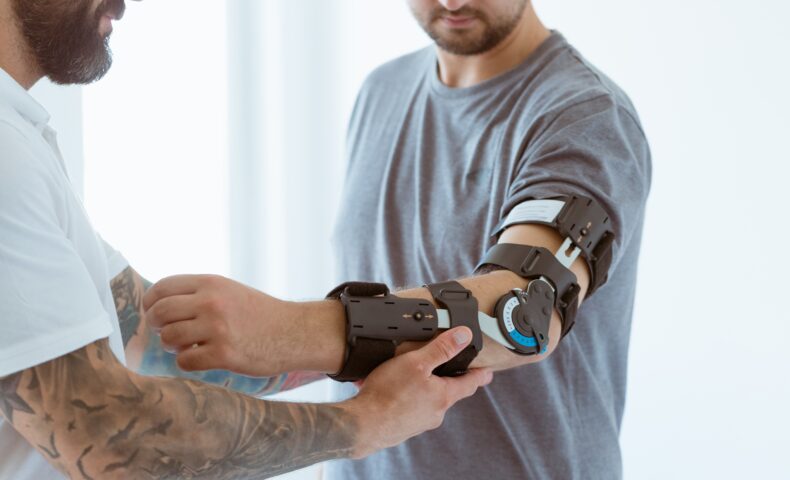
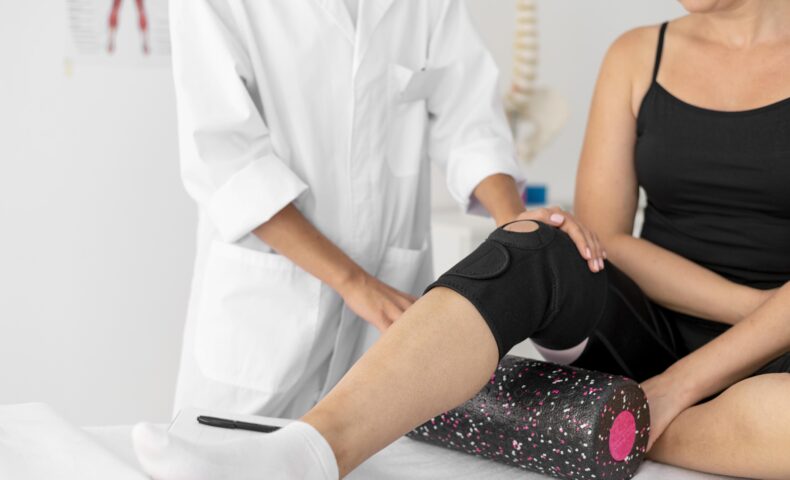
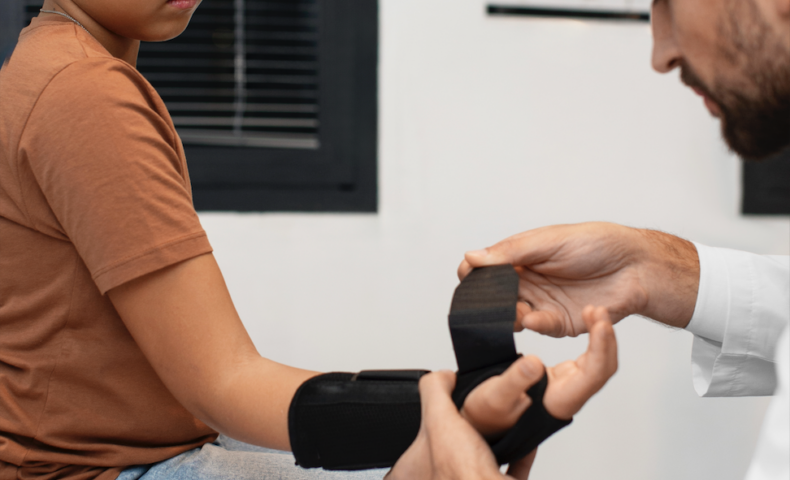
Ten years later, the company produces more than 5,000 devices a year across Canada and the United States. Most are custom knee braces, but O3D also makes elbow braces and wrist splints, all 3D printed through an automated design workflow.
“We wanted to improve the orthotics experience, make it easier for clinicians to take measurements, and bring the whole market into the digital era. Back then, it was still manual and very inconsistent.”
— Daniel Larouche, Vice-President of O3D
Custom knee braces: the scanner, weak link of the digital workflow
For a custom knee brace, everything starts with orthopedic measurement: the shape of the limb must be captured before the brace can be designed. After the first, very expensive scanners, O3D relied on external scanners paired with iPads. By 2024, this setup raised four problems:
- Daily workflow friction: the hardware added complexity to every appointment.
- Compatibility gaps: “We never knew when a new iOS version would break the communication between the scanner and the iPad,” says Daniel Larouche.
- An aging fleet: iPads and scanners wore out and required costly maintenance.
- A barrier to growth: each new clinic had to invest around $2,000 per scanner before even trying a product, and more for larger practices.
The switch to smartphone 3D scanning
O3D replaced this hardware by integrating our 3D scanning solution into its own app. Scans are taken with the back camera of a smartphone or iPad, on iOS as well as Android.
“Before, we were stuck with iPads. Now it doesn’t matter anymore.”
— Daniel Larouche, Vice-President of O3D
“Everybody has a smartphone in their pocket now, with a decent camera,” sums up Daniel Larouche. Measuring with 3D scanning comes down to three steps: calibrate, scan, send. As a result, orthotists get up to speed much faster.
One feature of our app particularly won O3D over: frame-by-frame playback of every scan. For training and support, it shows whether the orthotist was standing too far away or at the wrong angle, so it can be corrected.
Knee 3D scanning: precision, preview and lead time
For a 3D-printed brace, scan reliability is the top criterion. Requirements vary by body part: “Knee braces give you more margin. For the hand, 1 or 2 millimeters can make a huge difference,” notes Daniel Larouche.
The same level of precision applies to hand 3D scanning, where every millimeter counts for a splint to fit.
Combined with O3D’s app, our technology also lets clinicians preview the brace before it is printed. The orthotist can request corrections before manufacturing rather than after fitting.
The result: fewer than 1% of braces don’t fit. Once a scan is received, processing takes about 20 minutes and the brace is printed the same day, then shipped to the patient quickly.
“When you make 3D braces, the first thing you want is reliability and precision. That was the first thing we looked for when replacing our previous scanning solution.”
— Daniel Larouche, Vice-President of O3D
40% time saved and no more lost scans
The main gain is clinical time: O3D estimates it has cut overall patient assessment time by 40%. “Orthotists are hard to find, so you want them to see as many patients as possible,” Daniel Larouche points out.
Part of this gain comes from the direct connection between our platform and O3D’s. Scan files used to be sent by email, and being large, they sometimes got stuck in the outbox of a disconnected iPad. The clinic would then call to ask about a brace whose order O3D had never received. Now every scan reaches O3D’s platform in real time, and production can start right away.
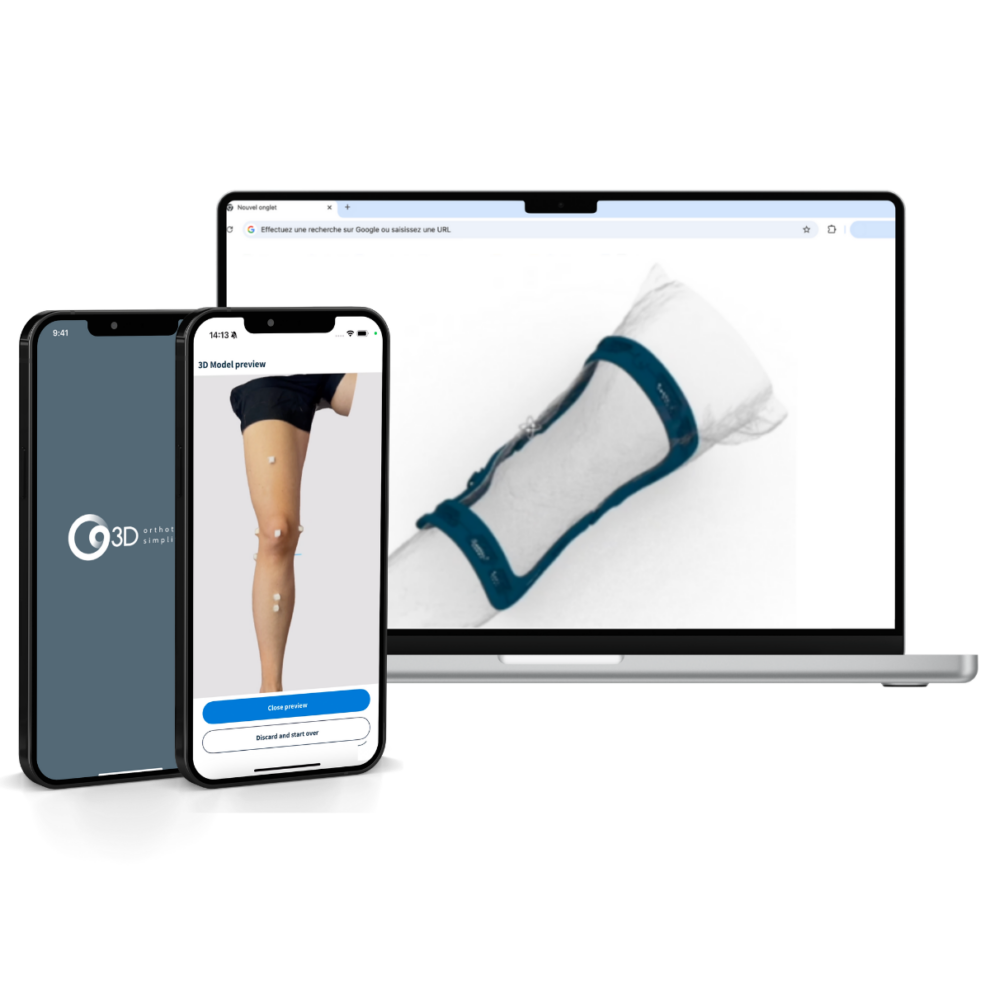
The orthotic workflow thus becomes fully digital, from scan to the start of manufacturing.
The business impact is clear: O3D produced around 90 braces a week with its previous equipment. Two years after integrating our solution, it produces more than 150, for more than 60 clinics and more than 250 orthotists who scan every day.
Custom knee braces: the last barrier to purchase is gone
Removing the hardware above all lifted a commercial barrier. In the past, an orthotist interested in a new knee brace first had to buy a scanner to try it. “Now I just tell them to download the app on their iPhone, or on Android,” explains Daniel Larouche. In his view, this ease of use, more than any other factor, explains the sharp rise in sales.
Onboarding new customers is also simpler. As soon as the app is installed, they can send test scans. Thanks to frame-by-frame playback, O3D checks their technique remotely before the first real patient.
For a made-to-order manufacturer, the international stakes remain limited. But Daniel Larouche sees far greater potential for a prefab manufacturer or one with printing sites around the world: reliable data, guaranteed to be received, instantly shared across every site.
Beyond the knee
Our solution is not limited to the knee. It captures the entire body, segment by segment, from leg 3D scanning to the torso, with medical-grade precision above 98%. We also cover orthopedic insoles, a major market for us: the plantar shape is scanned directly in the foam box, then sent to the design software.
According to our users, a scan takes about ten seconds. Our offer suits large manufacturers, with full SDK integration, as well as small clinics with one or two CPOs, with a ready-to-use app available on the app stores.
For us, it all comes down to three points: no additional hardware, immediate adoption and medical-grade precision proven in the field. For O3D, the verdict is clear: once its orthotists adopted the tool, they would never go back to an external scanner. A conclusion shared by other professionals using mobile 3D scanning in orthopedics, such as orthotist and prosthetist Clément David.
Custom knee braces: O3D’s key figures
| Metric | With our solution |
|---|---|
| Patient assessment time in clinic | −40% |
| Braces produced per week | 150+ |
| Braces that don’t fit | Fewer than 1% |
| Hardware to buy | None, a smartphone is enough |
| Clinics equipped | 60+ |
| Orthotists scanning daily | 250+ |
Figures presented by O3D during our joint talk.
Switch to smartphone 3D scanning
FAQ
Yes. Our app uses the back camera of a smartphone on iOS and Android, or iPad. At O3D, more than 250 orthotists scan their patients’ knees this way every day to order custom knee braces.
No. Mobile 3D scanning replaces the external scanner and the iPad it was paired with. Clinics no longer need to invest for a scanner: a smartphone is enough.
Our solution offers medical-grade precision above 99%. At O3D, fewer than 1% of the custom knee braces produced from these scans don’t fit.
According to our users, it’s between five and ten seconds. The scan then reaches the manufacturer’s platform in real time, with no manual email transfer.