In short
SDK 3D scanning lets you add a 3D capture feature directly into an existing iOS or Android app, without developing the technology in-house. With the MyFit Solutions mobile SDK, companies rely on MyFit mobile photogrammetry to generate a usable 3D model, connected to their business workflows via APIs and Webhooks.
An SDK 3D scanning solution makes it possible to add a 3D capture feature to a mobile application. It provides developers with the tools they need to integrate scanning, generate a 3D model and connect data to existing workflows.
With MyFit Solutions, companies can capture body morphology from a smartphone. The mobile SDK makes it possible to offer a mobile 3D scanning experience, without developing the entire technology in-house.
In this article, discover how to integrate this technology into an iOS or Android app. We will also explore how it can help create custom-fit products, personalize the user experience and use reliable morphology data.
Understanding the role of an SDK in mobile 3D scanning
Defining the SDK in a few words
An SDK, or Software Development Kit, is a set of development tools. It brings together libraries, documentation and sometimes code examples.
In the context of mobile 3D scanning, it allows developers to add a 3D scanning feature to an existing app or to an application currently under development.
Integrating 3D scanning into a mobile application
A mobile SDK is designed for applications built for smartphones and tablets. It can be compatible with iOS, Android or both, depending on the project’s needs.
With a mobile SDK dedicated to 3D scanning, companies can integrate a capture experience directly into their own app. They can generate a 3D model from a smartphone, without starting from scratch on the development side.
Depending on the technology used, the scan may rely on mobile photogrammetry or on the smartphone cameras. The goal remains the same: capture body morphology, create usable 3D data and integrate it into a smooth user journey.
Why use a mobile SDK?
A mobile SDK allows companies to add a new feature to an app without developing everything in-house. It is a simpler way to integrate advanced technology, such as mobile 3D scanning.
With an SDK 3D scanning solution, developers get ready-to-integrate tools: libraries, documentation, API and code examples. These resources simplify development and speed up the implementation of the user experience.
This approach also helps keep the journey fluid inside the app. The user can perform a scan, generate a 3D model and send the data without leaving the environment.
For companies, the mobile SDK offers a real time saving. It simplifies technical integration, reduces development costs and makes it possible to deploy a reliable 3D scanning feature in an iOS or Android app.
SDK, ready-to-use app or white-label solution: what is the difference?
The choice depends on the level of integration required and the technical environment already in place.
| Criteria | Mobile SDK | Ready-to-use app | White-label |
| Technical team required | Yes | No | Minimal |
| Time to deploy | Variable, depends on integration | Immediate | Fast |
| Customization | Full, embedded in your existing app | Limited | Adapted to your brand |
| Control over user journey | Full | Standard MyFit journey | Partial |
| Best fit for | Companies with an existing digital environment | Fast start with no development | Trade-off between branding and speed |
A mobile SDK is mainly designed for companies that want to integrate 3D scanning into their own app. It is suited to projects with a technical team or an existing digital environment.
By contrast, a ready-to-use app makes it possible to use mobile 3D scanning more quickly, without specific development. A white-label solution offers a middle ground: the experience can be customized to match the company’s brand, without starting from scratch.
The choice depends on the level of integration required. With an SDK 3D scanning solution, the company keeps control of its app, user journey and the way 3D data is connected to its business workflows.
How to integrate a mobile SDK into an Android or iOS app
Integrating a mobile SDK depends on your app, technical environment and desired user journey. For an SDK 3D scanning solution, the goal is to add a smooth 3D capture feature without making the in-app experience more complex.
Here are the main steps to plan.
Step 1: choose the right SDK
The first step is to select an SDK that is compatible with your iOS or Android app, drawing for example on the official Apple Developer or Android Developers documentation. It must meet your technical requirements, but also support the expected use cases: mobile 3D scanning, 3D model generation, data retrieval or connection to your workflows.
Step 2: prepare the development environment
Once the SDK has been selected, developers can retrieve the required resources. This can be done through the files provided by the vendor or through a dependency manager in their development environment.
The documentation then helps them understand the prerequisites, best practices and code examples associated with the mobile SDK.
Step 3: integrate the SDK into the app
Developers then add the SDK to the mobile application. This step may include importing libraries, configuring settings and setting up the required dependencies.
The SDK is then initialized at the right moment in the user journey. The API provided makes it possible to activate the desired features, such as 3D capture or access to the generated data.
Step 4: test and optimize the experience
Once the integration is complete, it is essential to test the SDK on different devices, iOS or Android versions and use cases. These tests help verify stability, compatibility and the quality of the user journey.
Optimization then helps ensure a smooth and fast experience. This is especially important if the app uses several SDKs, or if mobile 3D scanning needs to be integrated into an existing workflow.
With MyFit Solutions mobile SDKs, companies can integrate 3D scanning technology into their app, while relying on resources designed to make deployment easier.
Integrating a MyFit Solutions mobile SDK: simple and customizable
MyFit Solutions mobile SDKs are designed to integrate mobile 3D scanning into an iOS or Android app. They allow companies to add a 3D capture feature, without developing the entire technology in-house.
This approach opens new possibilities in healthcare, consumer goods and luxury. It makes it possible to offer a simple, guided scanning experience adapted to business use cases.
With MyFit Solutions, the mobile SDK can be integrated into an existing app or a new project. It can also be customized according to your user journey, brand identity and technical requirements.
The goal is clear: help you deploy a reliable, scalable mobile 3D scanning solution that is easy to integrate into your workflows.
Which 3D scanning technologies can be integrated through a mobile SDK?
With MyFit Solutions, companies can integrate mobile 3D scanning technology directly into their iOS or Android app. The goal is to let users capture a body area from a smartphone, then generate a usable 3D model.
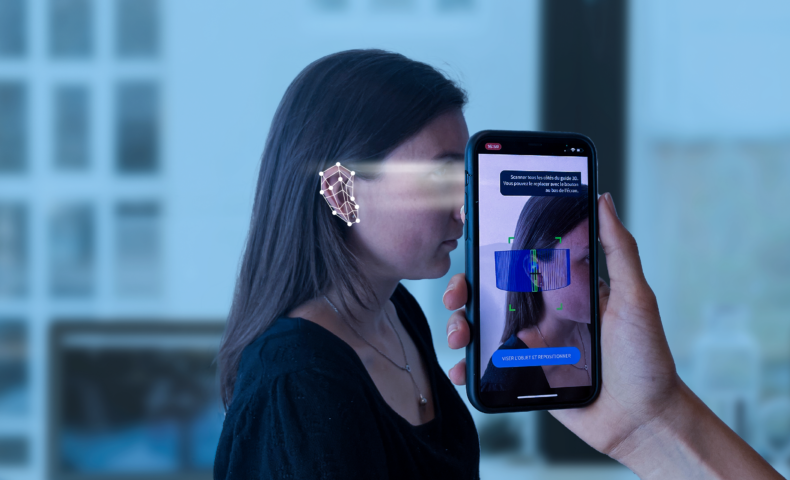
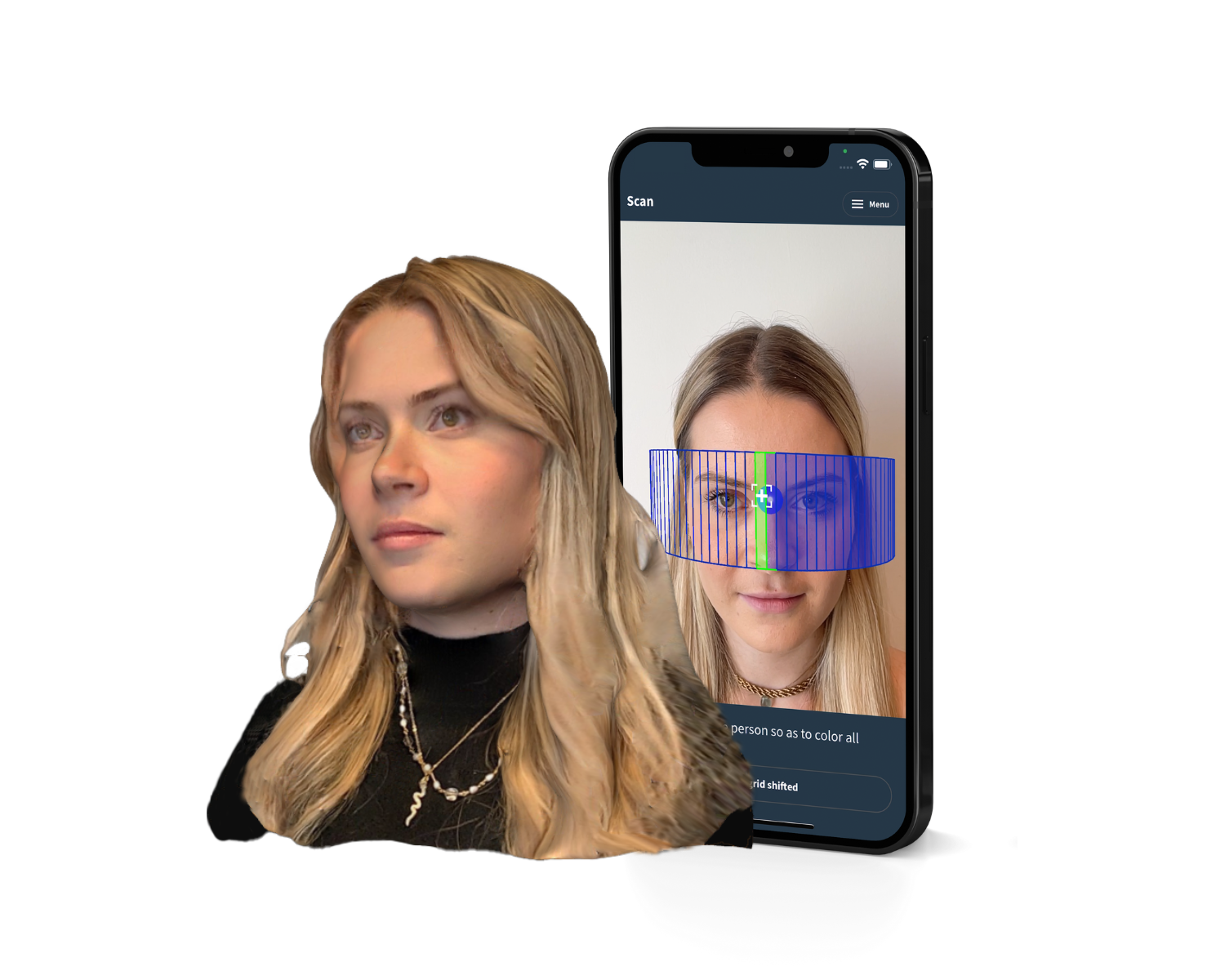
The capture relies on the smartphone cameras and on a 3D reconstruction technology: MyFit mobile photogrammetry. The user follows a guided journey designed to help maintain the right distance, angle and positioning during the scan.
This approach makes it possible to create experiences adapted to several sectors:
- healthcare and orthotics;
- compression garments;
- consumer goods;
- fashion and luxury;
- custom-fit products.
Thanks to SDK 3D scanning, this feature can be integrated into an existing app or a new mobile project. Companies can offer a smooth scanning experience, aligned with their brand and connected to their digital ecosystem.
The generated data can then be used to create a 3D model, retrieve measurements, personalize a product or feed a business workflow.
Benefits of the MyFit Solutions mobile SDK for 3D scanning
The MyFit Solutions mobile SDK makes it possible to integrate 3D scanning technology directly into an iOS or Android app. It helps companies offer a guided, smooth capture experience adapted to their business use cases.
Compatibility with a wide range of smartphones
With MyFit Solutions, mobile 3D scanning can be deployed across many smartphones. The capture relies on the phone cameras, with no dedicated 3D scanner required.
This compatibility makes large-scale deployment easier. Companies can offer an accessible scanning experience, whether their users are on iOS or Android.
The goal is simple: help professionals collect reliable morphology data, without imposing specialized hardware on their teams or customers.
Easy integration into your applications
The MyFit Solutions mobile SDK is designed to integrate into existing applications or new iOS and Android projects. Developers have access to dedicated documentation to implement 3D scanning technology more easily.
MyFit Solutions also provides an associated web platform. It allows teams to view 3D models, download them and manage users.
The platform can also be connected to your digital processes through standard connectors, such as Webhooks and APIs. The data generated by the scan can therefore be integrated directly into your business workflows.
Reducing returns and improving the user experience
The MyFit Solutions mobile SDK helps companies personalize their products using precise morphology data. It can be used in demanding sectors such as healthcare, consumer goods, fashion or luxury.
The data generated by the 3D scan can be used to design or recommend better-fitting products:
- orthoses;
- compression garments;
- shoes;
- jewelry;
- custom accessories.
This personalization helps improve fit, comfort and the overall user experience. It can also help customers visualize your body in 3D or better understand how a product adapts to their morphology.
For companies, the value is also operational. Better-fitting products can help reduce errors, returns and exchanges, while strengthening customer satisfaction and loyalty.
By integrating an SDK 3D scanning solution into their app, companies can create mobile experiences that are more personalized, more fluid and better connected to their business workflows.
FAQ
An SDK integrates into an existing app and requires a technical team, while a ready-to-use app lets you get started immediately, with no development.
Yes, MyFit Solutions mobile SDKs are available for iOS and Android, depending on your project’s needs.
usable 3D model along with digital measurements, accessible through the web platform or directly integrable into your workflows via APIs and Webhooks.
No. The SDK relies on MyFit mobile photogrammetry, which uses the smartphone’s standard camera, with no additional sensor or accessory.