In short
3D scanning for luxury lets premium houses capture a customer’s morphology (face, hand, wrist, bust) directly from a smartphone, with no dedicated scanner. This data powers virtual try-on, size recommendation, and product personalization, in-store, online, or internationally. With MyFit Solutions, this capture relies on MyFit mobile photogrammetry, integrable into existing retail and e-commerce workflows.
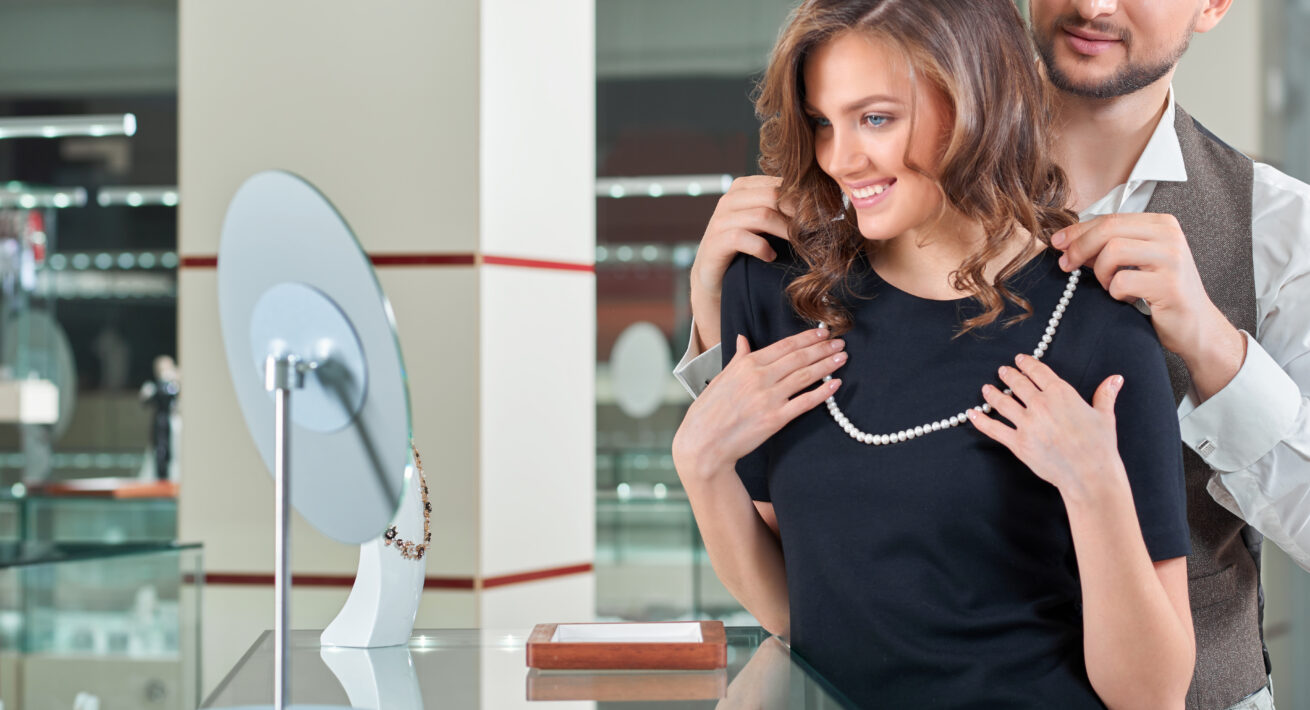
What if your customers could visualize a piece of jewelry, an accessory or a custom-made creation directly on their own morphology? With 3D scanning for luxury, brands can offer an experience that is more immersive, more personal and closer to in-store guidance, even remotely.
Thanks to mobile 3D scanning, it becomes possible to capture a specific body area from a smartphone: face, hand, wrist, bust or any other area needed depending on the product. This data can then be used to create a 3D customer model, offer virtual try-on, recommend a size or design a custom-fit product.
For luxury houses, this approach makes it possible to combine technological innovation with premium standards. The smartphone becomes a simple and scalable capture tool, capable of enriching the customer experience without requiring a dedicated 3D scanner or a complex journey.
In this article, discover how 3D scanning for luxury can help premium brands personalize their products, improve virtual try-on and integrate morphology capture into their retail or e-commerce workflows.
Luxury: when innovation brings tradition and technology together
Technology in service of the luxury customer experience
For a long time, luxury was associated with craftsmanship, precision and a privileged in-store relationship. Today, technology does not replace these standards. On the contrary, it enriches them with digital experiences that are more personalized and more immersive.
Premium brands now seek to extend the quality of in-store guidance across every customer journey: in store, online, remotely or internationally. Mobile 3D scanning, virtual try-on and size recommendation are becoming key levers to better understand customer morphology and offer a truly adapted experience.
Thanks to smartphone-based morphology capture, it becomes possible to:
- visualize a piece of jewelry, an accessory or a product on a 3D customer model;
- recommend a more suitable size;
- personalize a product based on the customer’s real measurements;
- prepare an in-store appointment with usable data in advance;
- enrich the online or remote purchase experience;
- create a more individualized relationship, in a one-to-one approach.
For luxury houses, the challenge is therefore not only technological. It is about creating a stronger connection between the brand and the customer by combining innovation, premium service and personalization at scale.
The major technology trends shaping luxury
In luxury, digital innovation is not only about modernizing brand image. Above all, it helps create experiences that are more personalized, more seamless and closer to customer expectations, both in store and online.
1. The digitalization of purchase journeys
Luxury houses are increasingly developing their e-commerce experiences without giving up the quality of traditional guidance. According to McKinsey, online sales are expected to account for nearly one-fifth of the global luxury market, a shift pushing brands to extend the in-store experience remotely.
This digitalization relies in particular on:
- 3D product visualization;
- virtual try-on;
- size recommendation;
- product personalization;
- click and collect or preparation before an in-store appointment.
In this context, mobile 3D scanning becomes a valuable tool to connect physical and digital experiences. It makes it possible to capture customer morphology from a smartphone, then use this data in a retail, e-commerce or omnichannel journey.
2. Virtual try-on and immersive experiences
Artificial intelligence, augmented reality and 3D modeling allow brands to offer more interactive experiences. Customers can visualize a piece of jewelry, an accessory or a product on a 3D model that is closer to their real morphology.
For luxury houses, this approach brings real added value: it helps customers picture the product more easily, strengthens the quality of guidance and supports decision-making, even remotely. Virtual try-on then becomes a lever of trust, especially for high-value purchases.
With 3D scanning from a smartphone, this experience can go even further. Captured morphological data can be used to create a 3D avatar, recommend a size, adapt a product or prepare more precise personalization.
3. Data in service of ultra-personalization
Data is also becoming a major challenge for premium brands. Better understanding a customer’s morphology, preferences and usage habits makes it possible to offer a more individualized experience.
In luxury, this personalization is not limited to the final product. It also affects guidance, recommendation, in-store preparation, customer follow-up and the long-term relationship with the brand.
By integrating usable 3D data into their workflows, brands can offer better-fitted products, reduce sizing errors and enrich their customer service. Technology then becomes a discreet but powerful support for luxury standards.
Technology challenges for luxury houses
For luxury houses, technology is no longer just a tool for innovation. It is becoming a lever to provide better guidance, improve personalization and connect customer journeys more effectively, both in store and online.
Digitalization now affects the entire value chain: customer relationship, sales, product recommendation, logistics, stock management and internal workflows. The challenge is to offer a premium, seamless and consistent experience, without losing the level of service expected in luxury.
Technology can help luxury brands:
- strengthen sales teams by giving them simple tools to advise, recommend and personalize more easily;
- drive sales through a better understanding of customer morphology, needs and preferences;
- limit sizing errors by relying on more precise data to recommend the right product or fit;
- reduce returns, especially when customers receive a product that is better adapted to their measurements from the start;
- improve stock management by anticipating needs and preparing the most relevant products before a visit or order;
- reinforce brand image by creating an innovative, premium experience aligned with the house’s positioning;
- develop an omnichannel strategy by connecting mobile application, e-commerce website, physical store and remote guidance.
In this context, mobile 3D scanning provides a concrete answer. It makes it possible to capture the morphology of a hand, wrist, face or another body area directly from a smartphone. This data can then be used to recommend a size, create a 3D customer model, prepare personalization or integrate morphology capture into retail and e-commerce workflows.
The smartphone: a 3D capture tool for premium retail
Today, being online is no longer enough. Brands also need to offer mobile experiences that are seamless, fluid and aligned with new customer habits. The smartphone becomes a strategic touchpoint, able to support the customer before, during or after an in-store visit.
In luxury, a mobile application can offer several benefits:
- better understand the customer’s morphology and needs;
- provide a virtual try-on or 3D visualization experience;
- recommend a more suitable size or product;
- prepare an in-store visit with usable data already available;
- help field teams use digital tools more easily;
- connect retail, e-commerce and remote guidance journeys.
Mobile 3D scanning fits perfectly into this logic. From a smartphone, it becomes possible to capture a body area, create a 3D customer model and integrate this data into a premium retail workflow.
For luxury houses, this technology can enrich the purchase experience without weakening the customer relationship. It brings a more personalized, more modern service that is easier to deploy at scale.
Photos, video or 3D scanning: how reliable is each for a premium sales assistant?
In luxury, providing the right guidance means understanding the customer’s real morphology. To recommend a size, personalize a piece of jewelry or design a custom-fit product, brands need data that is reliable, precise and easy to use.
Today, some solutions still rely on photos, videos or self-reported information. But this data can be imprecise. It does not always represent the customer’s volumes, proportions or dimensions accurately.
| Criteria | Photos / self-reported | MyFit mobile 3D scanning |
| Required hardware | Smartphone (simple photo) | Smartphone, dedicated app |
| Data reliability | Variable, not standardized | Guided by the app, reproducible |
| Remote capability | Possible but unreliable | Possible and reliable |
| Data obtained | A2D imagesucun | 3D model + digital measurements |
| Integration with business tools | Manual | Direct |
Mobile 3D scanning offers a more reliable and easier-to-deploy alternative. From a smartphone, it becomes possible to capture a specific body area: bust, face, hand, wrist or any other area needed depending on the product.
Once the capture is complete, the data can be used to create a 3D customer model, recommend a size or prepare more precise personalization.
For sales teams, this technology becomes a true assistance tool. It complements human guidance while avoiding manual measurements, tape measures or the need for a dedicated 3D scanner.
In store, online or internationally, 3D scanning for luxury makes it possible to offer a smoother experience: 3D visualization, virtual try-on, size recommendation, appointment preparation or custom-fit product design.
1. In store: enhance guidance with a 3D customer model
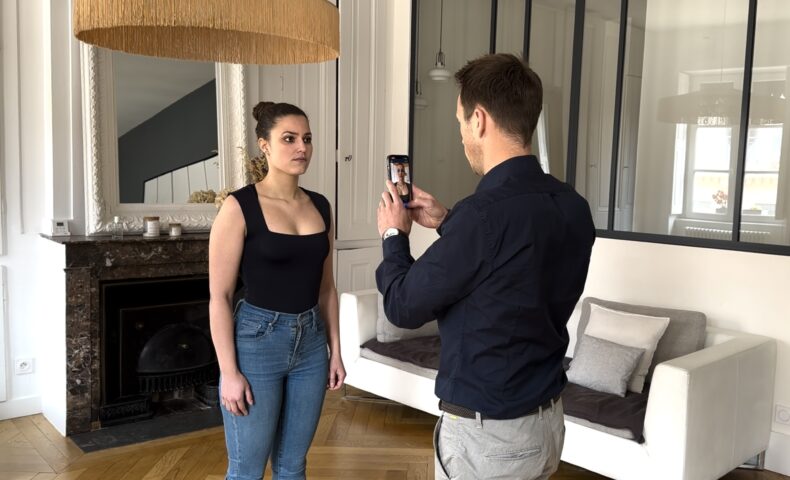
In store, mobile 3D scanning can become a real sales guidance tool. In just a few moments, the sales advisor can capture a specific area of the customer’s body: bust, hand, wrist, face or any other area needed depending on the product.
This capture makes it possible to create a 3D customer model, also known as a digital twin. The customer can then visualize a piece of jewelry, an accessory or a creation on their own morphology, rather than on a standard mannequin.
The value is twofold. For the customer, the experience becomes more immersive and more personalized. For the brand, morphological data can help recommend the right size, adapt a product or prepare a custom-made creation.
The process can remain very simple:
Step 1
The sales advisor performs the scan from a smartphone.
Step 2
The 3D model is generated to scale.
Step 3
The customer visualizes the product on their digital twin.
Step 4
The sales team can recommend a more suitable size, adjustment or model.
Beyond virtual try-on, 3D scanning therefore brings a real advisory dimension. It helps take the customer’s volumes, proportions and measurements into account more accurately, while strengthening the quality of the in-store experience.
2. Online: extend the luxury experience remotely
Online, mobile 3D scanning helps bring the e-commerce experience closer to the guidance provided in store. Customers can perform a capture from home, directly from a smartphone, either on their own or with the help of a remote advisor.
For luxury brands, this upstream capture makes it possible to:
- access usable morphological data before the exchange;
- prepare the right sizes, models or options;
- offer virtual try-on on an avatar or 3D customer model;
- streamline the purchase journey, even remotely;
- strengthen the personalization of guidance.
For example, for shoes, jewelry or an accessory adapted to the customer’s morphology, the sales team can anticipate the customer’s needs before their in-store visit. They save time, provide more accurate guidance and reduce errors linked to manual estimation.
For premium brands, this continuity between digital and in-store experiences strengthens the quality of the omnichannel journey. It makes it possible to offer a service that is more seamless, more personalized and more aligned with luxury expectations.
3. Internationally: anticipate the expectations of global customers
For luxury houses, the customer base is often international. Some customers travel to access products, collections or services they cannot find in their own country. Others prepare their purchase in advance before visiting a boutique, especially when it involves high-value pieces or personalized creations.
In this context, mobile 3D scanning makes it possible to create a first connection before the physical meeting. The brand can collect certain morphological data remotely, better understand the customer’s needs and prepare guidance before their arrival.
This approach makes the journey more seamless. The in-store appointment no longer starts from scratch: teams already have useful information to guide the conversation, select certain products or consider custom-made options.
For international customers, the experience becomes more comfortable and more precise. They can picture the result more easily, visualize their body in 3D or prepare a purchase from their smartphone, while keeping the level of service expected from a luxury house.
3D capture therefore becomes a bridge between the digital experience and the in-store welcome: a discreet yet powerful tool to offer a journey that is more personalized, better prepared and more premium.
How to visualize your body in 3D? Technology at your fingertips
A 3D scanner that fits in your pocket
3D acquisition equipment is often expensive, bulky and more complex to deploy. In luxury, however, this technology must remain seamless, intuitive and consistent with a premium customer experience.
With MyFit Solutions, 3D acquisition is performed directly from a smartphone, using MyFit mobile photogrammetry. Customers can visualize their body in 3D, while the brand can use the data to recommend a size, personalize a product or prepare a virtual try-on experience.
The smartphone therefore becomes a pocket-sized 3D scanner, easy to integrate into retail or e-commerce workflows, without a dedicated scanner or complex training.
With MyFit Solutions, 3D scanning becomes simple to deploy. From a mobile application, teams can perform a capture without complex training, using a tool they already know: the smartphone.
Choosing MyFit Solutions means choosing a SaaS solution that is:
- simple and fast to implement;
- accessible from a smartphone;
- easy to integrate into retail or e-commerce workflows;
- useful for enriching guidance, size recommendation and the customer experience.
How to create a 3D model from a smartphone
With MyFit Solutions, 3D capture is performed directly from a mobile application available on iOS and Android. The user is guided step by step to capture the images needed for 3D reconstruction, without complex training.
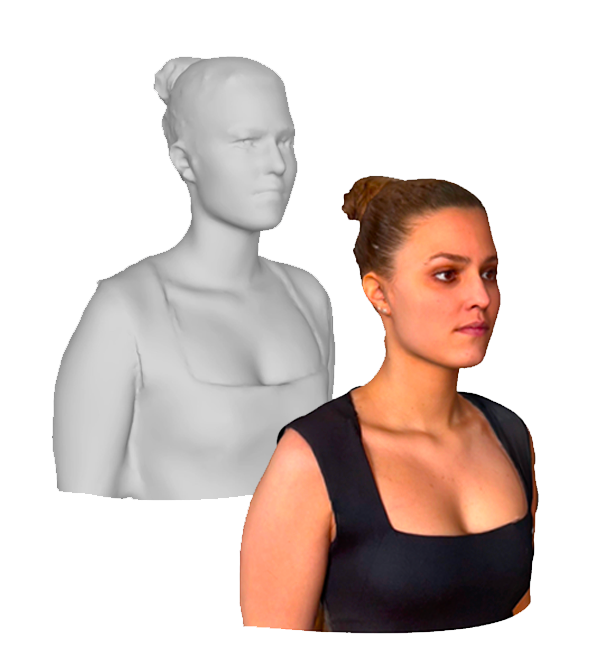
In just a few moments, the smartphone can generate a usable 3D model of a body area: face, hand, wrist, bust or any other area needed depending on the product. This data can then be used to visualize the customer’s morphology, recommend a size, prepare a virtual try-on experience or personalize a creation.
For luxury houses, this approach makes it possible to offer a shopping experience that is more seamless, more innovative and more personalized, while easily integrating into retail or e-commerce workflows.
MyFit Solutions also supports premium brands with solutions adapted to their image, including white-label 3D scanning solutions.
FAQ
No. MyFit mobile photogrammetry works with the standard camera on an iOS- or Android-compatible smartphone, with no additional sensor or accessory.
The face, hand, wrist, bust, or any other relevant area depending on the product being personalized.
Yes, the customer can perform the capture from home, either on their own or with the help of a remote advisor, before visiting the store.
Yes, MyFit Solutions supports premium brands with solutions adapted to their image, including white-label options.