
In short
Creating a custom-made hand orthosis or wrist splint requires reliable, reproducible measurements of the hand and wrist. MyFit mobile 3D scanning captures this morphology directly from a smartphone, with no tape measure, molding, or dedicated scanner required. The resulting data — a 3D model and digital measurements — supports recommending a standard size or designing a fully custom-made device, directly usable by manufacturers.
The manufacturing of a custom-made hand orthosis is evolving with mobile 3D scanning. It is now possible to capture the morphology of the hand and wrist directly from a smartphone, without specialized hardware or complex manual measurement.
Thanks to 3D capture and dedicated analysis tools, professionals can obtain a usable model to recommend a size, design a custom hand splint or transmit precise data to a manufacturer. This approach simplifies measurement, reduces errors and supports the creation of devices that are more comfortable for the patient.
In this article, discover how 3D hand scanning can help create a custom-made hand orthosis adapted to each patient’s individual needs and integrated into healthcare, orthotics and O&P workflows.
Digital measurement for creating a hand and wrist orthosis
What is a hand orthosis?
A hand orthosis, also known as a hand splint, is a medical device designed to hold a joint or limb in an adapted position. It can be used to reduce pain, protect a weakened area, correct a deformity, temporarily immobilize a limb or improve function.
For the hand and wrist, an orthosis can address different needs: supporting recovery after an injury, relieving a condition, stabilizing a joint or securing everyday movements. Depending on the patient’s situation, it can therefore have a curative, preventive or functional role.
There are several types of orthoses and splints, including thermoformed splints, dynamic orthoses, static orthoses, adjustable pre-formed splints and custom-molded devices. They can be made from different materials, such as plastic, carbon, metal, fabric or combinations of materials.
Hand orthoses can be offered in standard sizes or designed as custom-made devices. In the second case, measurement accuracy becomes essential to ensure a proper fit, better comfort and true adaptation to the patient’s morphology.
Why wear a hand orthosis or a wrist splint?
A hand orthosis or wrist splint helps keep the hand, wrist or certain joints in a stable position. It can help limit painful movements, protect a weakened area and support the patient’s recovery.
It may be prescribed in several situations: tendinitis, osteoarthritis, carpal tunnel syndrome, fracture, sprain, post-operative recovery or temporary immobilization. Depending on the case, the orthosis can help relieve pain, support healing or secure the gradual return to movement.
To be effective, however, the orthosis must be properly adjusted to the patient’s morphology. A splint that is too large, too tight or poorly positioned can create discomfort, reduce compliance and limit the benefits of the device.
This is why measurement plays an essential role, especially when designing a custom-made hand orthosis. Precise data helps ensure better support, adapted comfort and a truly personalized solution.
Why measure the wrist precisely?
For healthcare professionals, the challenge is to obtain measurements that are precise, reliable and reproducible. With a tape measure, however, measurement can vary depending on the practitioner, the method used or the patient’s positioning.
This variability can directly affect the choice of a wrist splint or the design of a custom-made hand orthosis. An inaccurate measurement can lead to a device that is too large, too tight or poorly adapted, with consequences for patient comfort, support efficiency and the quality of care.
With the growth of remote care pathways and healthcare e-commerce, this issue becomes even more important. Orthotics providers must be able to recommend a size or design a custom device, even when the patient is not physically present in the clinic.
Precise measurements therefore support two essential goals:
- recommending the right standard size;
- designing a custom-made device that is truly adapted to the patient’s morphology.
This is exactly where mobile 3D scanning brings a new answer. It helps standardize measurement, reduce human error and provide data that is easier to use for healthcare professionals, CPOs, orthotists and manufacturers.
Which measurements are useful for prescribing a custom-made hand orthosis?
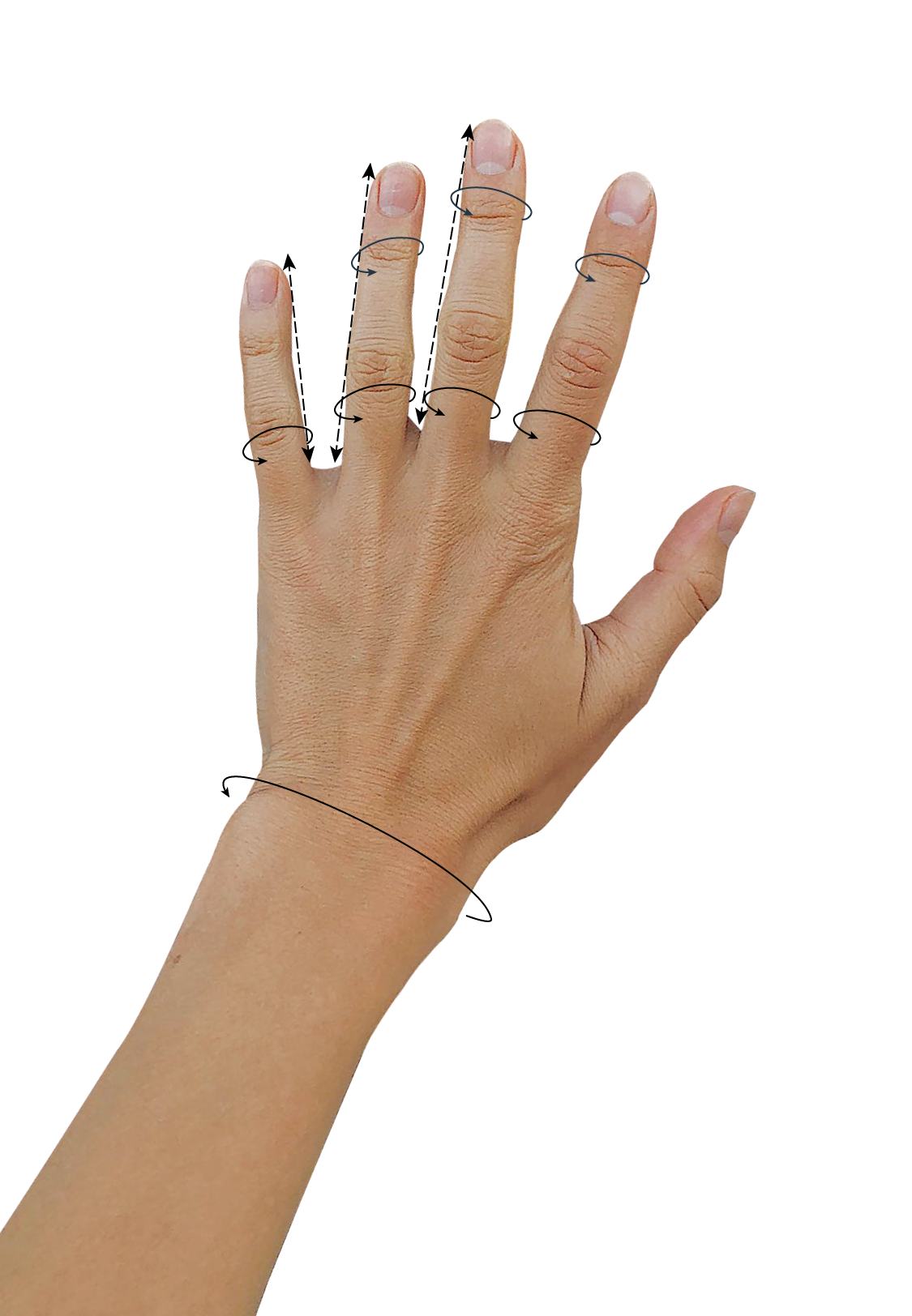
To prescribe a hand splint or wrist splint, each manufacturer relies on its own measurement framework. This means that hand and wrist orthoses are not always designed using the same anatomical landmarks or the same data.
The required measurements can vary depending on the type of device, the level of support needed and the area to be fitted. They may include:
- finger circumference;
- finger length;
- wrist circumference;
- wrist width or height;
- specific dimensions of the hand or forearm.
The challenge is therefore to extract the right measurements, in the right format, according to the manufacturer’s requirements. With 3D hand scanning, MyFit Solutions relies on MyFit mobile photogrammetry to capture the patient’s hand and wrist morphology from a smartphone, then use the necessary data to recommend a standard size or design a custom-made hand orthosis.
This approach adapts to existing manufacturer measurement frameworks. It helps standardize measurement, reduce errors linked to manual processes and simplify the work of orthotists, CPOs, healthcare professionals and manufacturers. Prescribing a custom-made hand orthosis becomes simpler, more reliable and better integrated into professional workflows.
Tape measure or mobile 3D scanning: what’s the difference for a custom hand orthosis?
| Criteria | Tape measure / molding | MyFit mobile 3D scanning |
| Required equipment | Tape measure, plaster | None, just the smartphone camera |
| Measurement reliability | Depends on the operator | Guided by the app, reproducible |
| Remote capability | No | Possible |
| Data obtained | Point measurements | 3D model + digital measurements |
| Manufacturer integration | Manual | Direct, .stl/.obj formats |
Why choose 3D scanning in orthotics?
Mobile 3D scanning helps healthcare professionals make measurement more reliable, without depending on a tape measure, a mold or a dedicated 3D scanner. With a simple smartphone, it becomes possible to capture the morphology of a limb and obtain data that is more precise and more reproducible.
1.Using 3D to recommend a standard splint size
To recommend a standard size, professionals need to compare the patient’s measurements with the manufacturer’s sizing framework. MyFit Solutions simplifies this step with a mobile application that can scan the hand, wrist or another body area, then extract the necessary data.
How does 3D scanning work to recommend a splint?
The measurements obtained are analyzed to identify the most suitable size in the manufacturer’s catalog: S, M, L or any other sizing grid. This approach simplifies size recommendation while reducing errors linked to manual measurement.
MyFit Solutions technology relies on analysis models trained and tested on a wide range of morphologies. In just a few seconds, the scan provides a recommendation that can be used by healthcare professionals, orthotists, CPOs or splint manufacturers.
This makes size recommendation easier to integrate into professional workflows, whether measurement is performed in clinic, in store, in the field or remotely.
What are the benefits of 3D digitization?
3D digitization makes it possible to capture the dimensions, volumes and shapes of a limb, such as the hand or wrist. In orthotics, it provides professionals with data that is more reliable and easier to use to recommend a size or design a custom-made hand orthosis.
- The first benefit is simplicity. With MyFit Solutions, measurement can be performed through a mobile application, using a tool that is already widely available: a smartphone. There is no need to invest in a dedicated 3D scanner or heavy equipment.
- The second benefit is speed. In just a few seconds, the scan can generate multiple measurements from a single capture. Professionals can save time while reducing repeated handling of the patient.
- The third benefit is measurement consistency. Unlike a tape measure, where results can vary from one practitioner to another, mobile 3D scanning helps standardize measurement and reduce errors linked to manual processes.
- 3D digitization also improves the patient experience. Capture can be performed without physical contact, without molding and without requiring the patient to travel to specialized equipment. It can therefore fit more easily into a care pathway in clinic, in store, in the field or remotely.
By combining 3D scanning, algorithms and manufacturer databases, it becomes easier to recommend the right size to the patient or transmit usable data for manufacturing. The result: fewer errors, fewer remakes and, in e-commerce healthcare workflows, a possible reduction in product returns.
2. Using 3D to create custom-made hand orthoses
When a hand orthosis is custom-made, it can be adapted to the exact shape of the patient’s hand and wrist. This precision helps ensure better positioning, improved comfort and a closer fit to the patient’s morphology.
How does 3D help design a custom-made orthosis?
Before manufacturing, reliable measurements are essential. This is where mobile 3D scanning brings real value: it makes it possible to capture the hand and wrist from a smartphone, without molding, without a tape measure and without a dedicated 3D scanner.
With MyFit Solutions, professionals can obtain a usable 3D model of the hand and wrist. This data can then be used to design a custom-made hand orthosis, transmit information to a manufacturer or feed an existing orthotics workflow.
The process is simple:
- A 3D scan of the hand and wrist is performed from a smartphone. MyFit Solutions algorithms guide and validate the capture at the time of scanning.
- The generated 3D model can be exported in .obj or .stl formats, then used by manufacturers to create a digital orthosis model.
- The custom-made device can then be manufactured using the chosen process: 3D printing, traditional manufacturing or any other method adapted to the manufacturer’s framework.
This approach simplifies the design of personalized orthoses while making it easier to integrate 3D data into the professional tools used by healthcare professionals, CPOs, orthotists and manufacturers.
Why invest in 3D scanning to design custom splints?
To design a custom splint, the quality of the initial data is essential. Before manufacturing even begins, the morphology of the hand and wrist must be captured with enough precision to create a device that is truly adapted to the patient.
Mobile 3D scanning can replace or complement traditional methods such as molding, tape measurement or certain thermoformed processes. With a smartphone, professionals can obtain a usable 3D model more quickly, without heavy equipment or additional hardware.
This approach also supports large-scale deployment. Practitioners, manufacturers and orthotics providers can use a lighter solution that is easier to adopt and better integrated into field workflows, whether measurement is performed in clinic, in store or remotely.
For the healthcare market, the benefits are numerous:
- access a mobile 3D scanning solution that is lightweight and easy to deploy;
- use a smartphone, without a dedicated 3D scanner, external sensor or computer connection;
- standardize measurement to reduce human error;
- reduce the risk of poor fit, remakes or product returns;
- centralize patient data on a single secure platform;
- bring real technological value to the orthotics market.
By integrating 3D scanning into their workflows, professionals can save time, make their processes more reliable and support patients with solutions that are more precise, more comfortable and more personalized.
Who is 3D scanning for hand orthoses designed for?
This solution is designed for professionals who want to simplify, secure or digitize measurement for hand and wrist orthoses: orthopedists, orthotists, CPOs, splint manufacturers, distribution networks, healthcare e-commerce providers or professionals equipped for remote patient care.
It makes it possible to integrate 3D capture into existing workflows, without requiring a dedicated 3D scanner or complex hardware to deploy.
No, it makes measurement easier and more reliable, but final prescription and fitting remain the responsibility of the healthcare professional.
Finger circumference and length, wrist circumference and dimensions, along with other anatomical landmarks specific to the manufacturer’s framework.
MyFit mobile photogrammetry works with the standard camera on an iOS- or Android-compatible smartphone, with no additional sensor or accessory.
Yes, capture can be performed in clinic, in store, in the field, or remotely, depending on the pathway offered by the professional or brand.