Why use 3D scanning in orthopedics?
3D scanning for orthopedics is currently revolutionizing measurement-taking for custom-made devices. Faster, more accurate, and more mobile, it is progressively replacing traditional methods.
Discover how an orthotist uses 3D scanning on a daily basis.
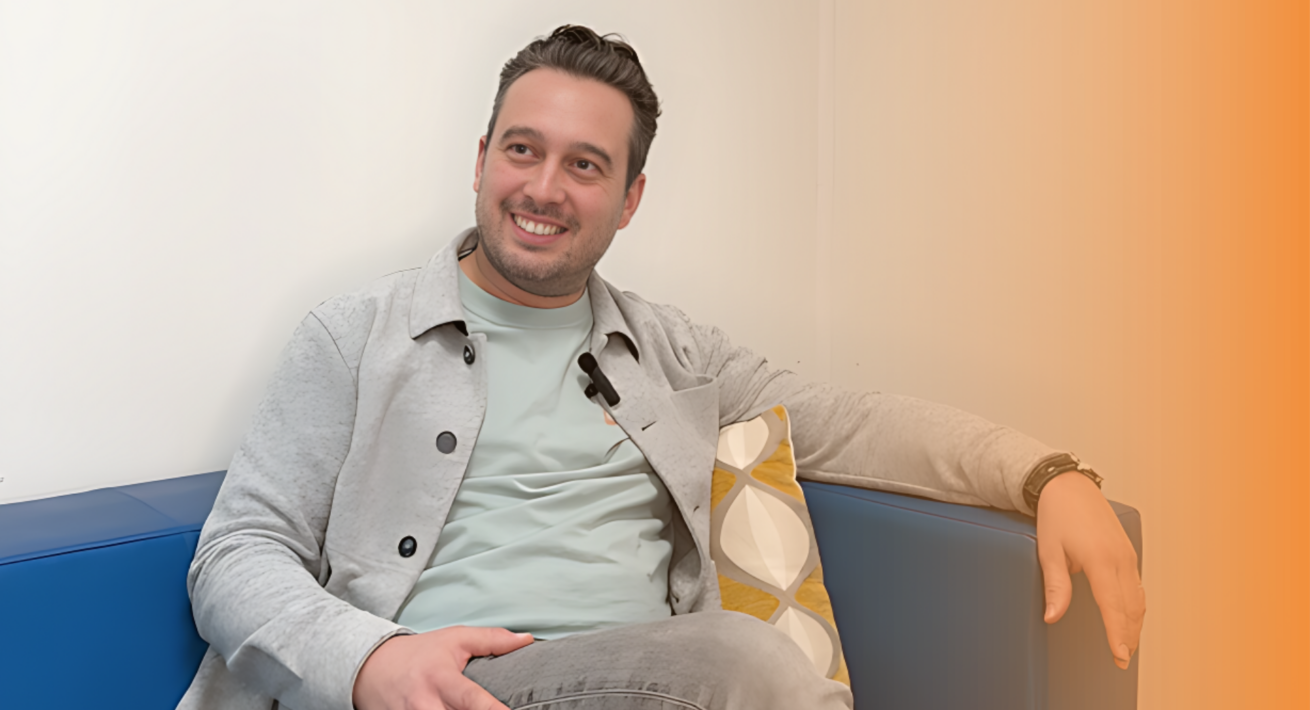
Clément David has been working with patients for over fifteen years. As a specialist in scoliosis, rehabilitation, and pediatrics, his scope of action is broad: he manages everything from back braces to large orthopedic appliances and mobility aids. As a facility manager, his daily routine is a constant balance between workshop precision and on-site flexibility to institutions or hospitals.
But in this daily practice, the orthotist quickly encounters limitations with traditional measurement tools.
The result? A loss of reactivity and heavy logistics that limit flexibility in patient care outside the center.
Faced with these mobility challenges, Clément decided to integrate 3D scanning directly on his smartphone. His goal? To transform his phone into a genuine medical measurement tool for orthopedics, always available, enabling faster decisions and eliminating the need for bulky equipment.
A reliable, precise solution — always in your pocket.
The limitations of traditional methods versus 3D scanning for orthopedics
Before adopting the mobile solution, Clément used several digital tools. While these technologies worked, they created major friction points:
- Bulky equipment: high-performance but voluminous scanners that were difficult to transport during interventions.
- Additional hardware constraints: other solutions require clipping additional sensors onto a tablet or smartphone, creating one more part to manage.
- Software limitations: some tools lacked usability making measurement-taking sometimes laborious and unintuitive.
Since I started using MyFit mobile 3D scanning, I don’t use anymore dedicated scanning hardware.
The solution for orthopedics: mobile 3D scanning
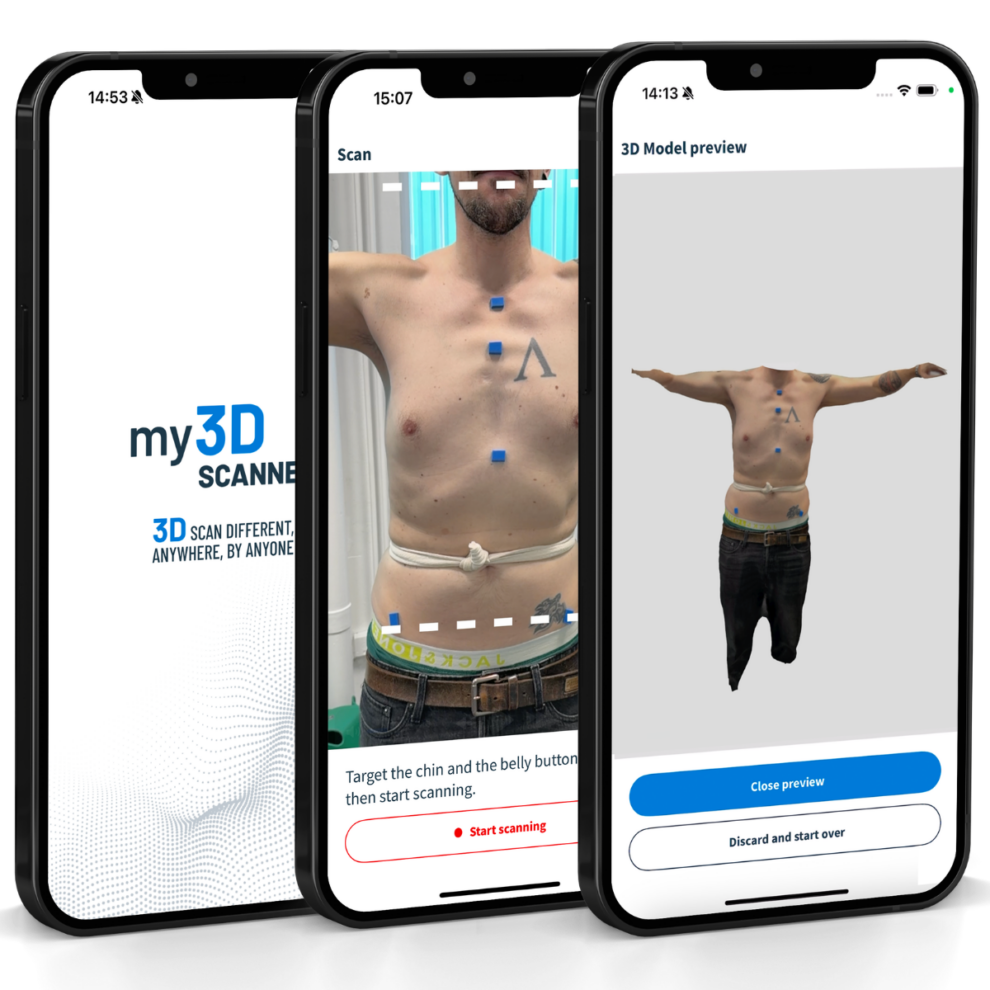
The turning point came with the adoption of the My3D Scanner mobile application. For the orthotist, the smartphone becomes the primary tool for 3D measurement-taking.
“The pocket effect”
The major benefit is immediate availability. The scanner is always with you. This level of mobility enables on-the-spot scans and unprecedented responsiveness during interventions.
A quick start with orthopedic 3D scanning
Switching to mobile 3D scanning in orthopedics was extremely simple. The interface, which is both simple and precise, guides users easily through the process, making daily use smooth and intuitive.
The learning curve was very short. It only took me two or three scans to feel confident and fully confident when working with patients.
Practical use cases
Today, Clément uses the solution daily for various applications. My3D Scanner is the starting point of his workflow for custom orthopedic devices :
- Scoliosis braces: the scan is performed directly on the patient in about 20 seconds. This speed limits errors related to patient movement and guarantees medical precision for spinal correction.
- Vacuum cushions: Clément utilizes the smartphone’s mobility to scan positioning molds. Where older scanners were too bulky to maneuver around the cast, the mobile device makes it easier to scan complex shapes.
- Custom positioning covers: the process ends with scanning the final cushion to create a perfectly fitted cover.
The solution can be used for many other applications for the design of custom orthotics and prosthetics, offering total flexibility to orthotists.
See 3D scanning in action: discover how Clément performs a complete measurement in less than 20 seconds for a custom-made brace!
What are the benefits for the patient?
Medical precision through 3D scanning for orthopedics
The resulting devices fit perfectly, eliminating the need to choose between bulky fixed systems and flexible mobile solutions. In just 20 seconds, the scan is completed with medical-grade precision.
I think it’s the reliability, it’s fast and accurate: you can’t go wrong!
A more peaceful patient relationship
The non-intrusive nature of mobile scanning is a total game-changer during orthopedic consultations. The process is fast, silent, and far less intimidating than a traditional scanner. For the patient, the exam becomes a fluid, natural step in their care journey.
While some patients may initially be surprised to see an “everyday” tool used for clinical purposes, their initial skepticism quickly disappears when they see the real-time 3D visualization.
Ultimately, the perfect fit of the finished device clearly shows that pocket technology can offer medical precision while preserving the patient’s comfort and peace of mind.
Simplicity, speed, and patient comfort: a completely non-invasive solution.
In summary: before / after MyFit Solutions
| Before MyFit Solutions | With MyFit Solutions |
| Bulky equipment or clip-on sensors. | “The pocket effect” thanks to the smartphone. |
| Stored in the workshop. | Always on you, ready for the unexpected. |
| Installation and calibration can be long. | 20 seconds for a complete scan. |
| Intrusive or intimidating devices. | Non-invasive and discreet. |
| Limited to planned appointments. | Every day, with total autonomy. |
The expert’s verdict
For Clément David, mobile 3D body scanning for orthotics can be summed up in three words: simple, precise, and always available.
Go for it without hesitation! It is very simple to use, you won’t have any difficulty, and you will benefit from it every day.
3D scanning for orthopedics is establishing itself today as a reliable, fast, and accessible solution for healthcare professionals. By simplifying measurement-taking and improving the precision of orthopedic devices, it is sustainably transforming field practices.
Through this feedback, it is clear that orthopedic 3D scanning is not limited to time savings: it allows for better patient care that is more fluid, more comfortable, and more efficient.
A natural evolution for orthotists who wish to combine medical precision, mobility, and simplicity in their daily work.