

In short
Designing custom glasses requires numerous facial measurements (pupillary distance, bridge width, temple length…), traditionally taken in-store by an optician. 3D face scanning for custom glasses makes it possible to capture these measurements from a smartphone, in-store or remotely. Using MyFit mobile photogrammetry, opticians and eyewear brands obtain a usable 3D face model to fit a frame or recommend the right size, with no sensor or specialized hardware.
What measurements are needed for custom glasses?
Taking measurements is a crucial step in fitting eyeglass frames. Licensed opticians are responsible for their customers’ comfort and visual health, offering optical and sun glasses suited to their morphology.
Fitting a pair of glasses correctly requires several measurements:
- pupillary distance, nasal width, and the canthus line, for eye size and positioning;
- lens width, matched to eye size and field of vision;
- bridge width, to avoid excessive pressure on the nose;
- temple length, for stable support behind the ears;
- sphenoidal and temporal spread, for balanced frame weight distribution.
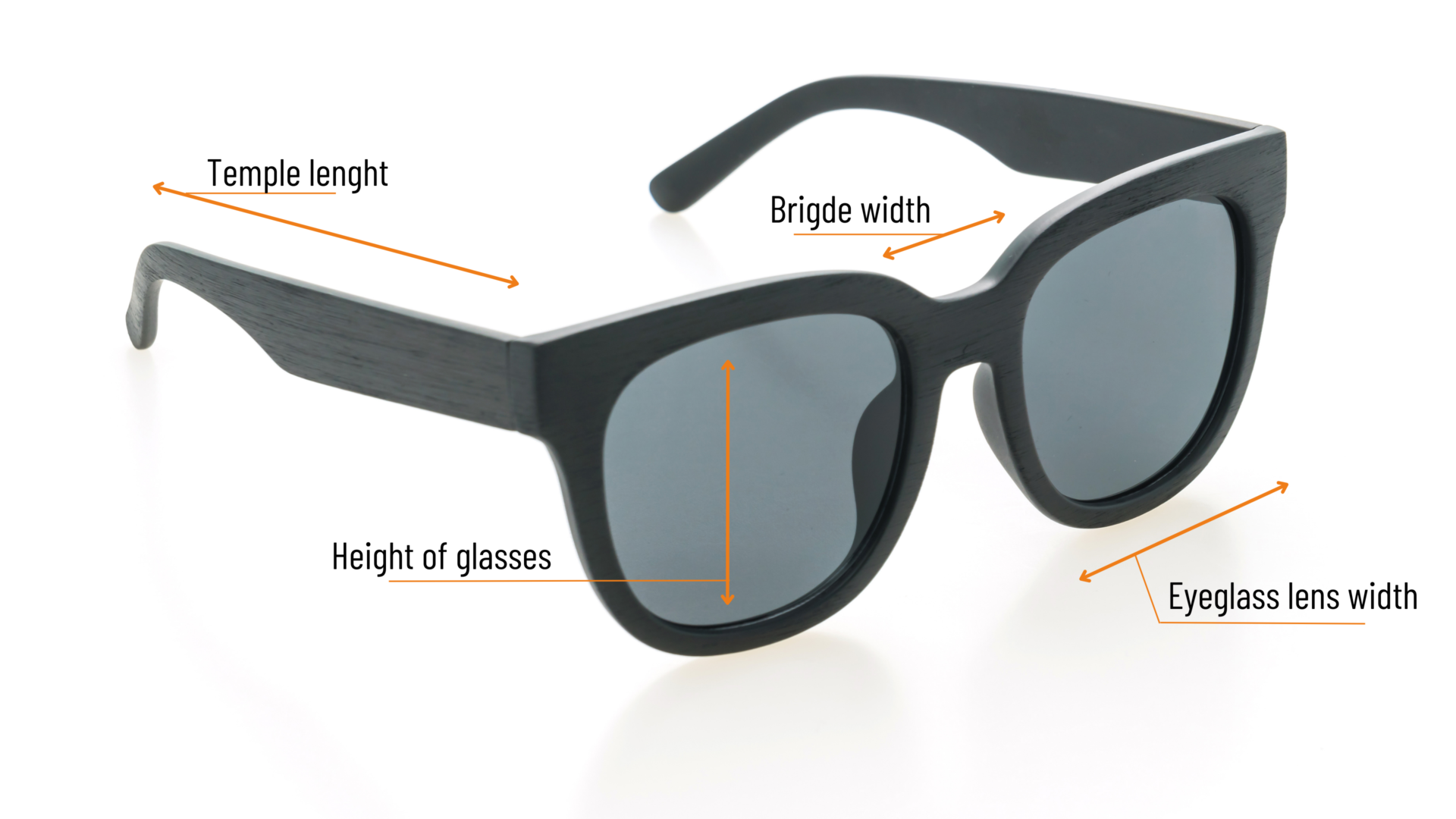
These measurements are traditionally taken by an optician, in-store.
Why is the eyewear market turning to 3D scanning?
The French eyewear market has seen steady growth, with revenue of €6.75 billion in 2021, up 13.5% from 2020. Online eyewear sales now account for over 7% of the market.
This growth in e-commerce raises a question: how can you ensure reliable remote measurement, with no in-person interaction with an optician? That’s the role played by 3D scanning from a smartphone, which makes it possible to capture usable measurements remotely to fit a frame or recommend the right size.
How does 3D face scanning for custom glasses work?
Designing custom glasses requires accounting for the full morphology of the face — ears included. 3D face scanning makes it possible to obtain a usable 3D model to analyze the shape of each area: the head’s oval shape, eyes, nose, or ears.
Step 1: preparation and reference points
The area to be scanned needs to be clear (hair pulled back or covered), using the ears as reference points. The MyFit Solutions app guides the user by indicating the right distance to maintain and displaying augmented reality markers.
Step 2: maintaining distance and position
The distance between the smartphone and the face needs to stay consistent throughout the scan, to avoid distortion. The person being scanned stays still, keeping the same facial expression, for the whole capture.
Step 3: complete face digitization
The scan captures every area of the face — contours, cheekbones, nose, lips, eyes, eyebrows, ears — guided in real time by the app, for a usable result on the first try.
In-store fitting or 3D face scanning: what’s the difference for custom glasses?
| Criteria | Traditional measurement | MyFit 3D face scanning |
| Required equipment | Optician’s instruments | None, just the smartphone camera |
| Physical presence | Required, in-store | Optional, can be done remotely |
| Areas captured | Targeted point measurements | Full 3D face model |
| E-commerce compatible | No | Yes |
| Data reuse | Limited | Usable 3D model, reusable in business tools |
What are the benefits of 3D face scanning for custom glasses?
Using a smartphone as a scanning tool offers several benefits for opticians, eyewear makers, and brands:
- Accessibility: the solution works on most Android and iPhone smartphones, via the rear camera, with no dedicated sensor or hardware to buy.
- Simplicity: the guided app requires no specific training to obtain a usable 3D face model.
- Fewer returns: a 3D model faithful to the customer’s morphology helps achieve a better frame fit, which can help limit product returns.
- Remote custom fit: the solution extends the personalization of optical or sun frames beyond the store.
This same 3D head scanning approach applies to other custom products, such as designing custom-made helmets.
MyFit Solutions offers this technology in several formats: a ready-to-use app, a white-label experience, or an SDK to integrate into an existing app.
FAQ
An optician, or the customer themselves as part of an online purchase, using a guided mobile app.
Yes, some brands offer a fully online purchase journey using 3D scanning, while others use it in-store to make measurement more reliable.
No. MyFit mobile photogrammetry works with the standard camera on an iOS- or Android-compatible smartphone, with no additional sensor.
A complete 3D face model, usable to fit a frame, recommend a size, or feed into manufacturers’ design tools.